

Inspiration
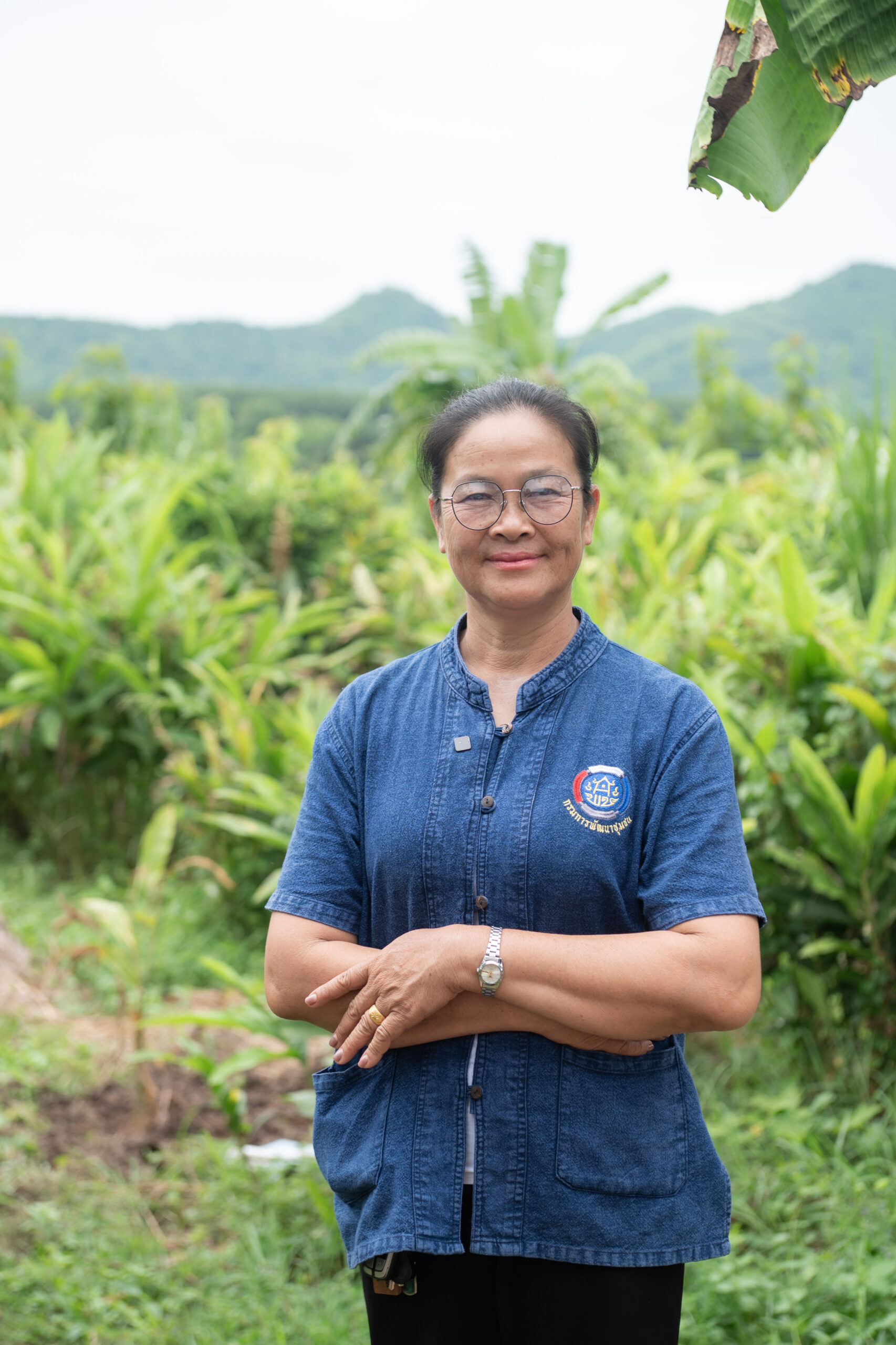
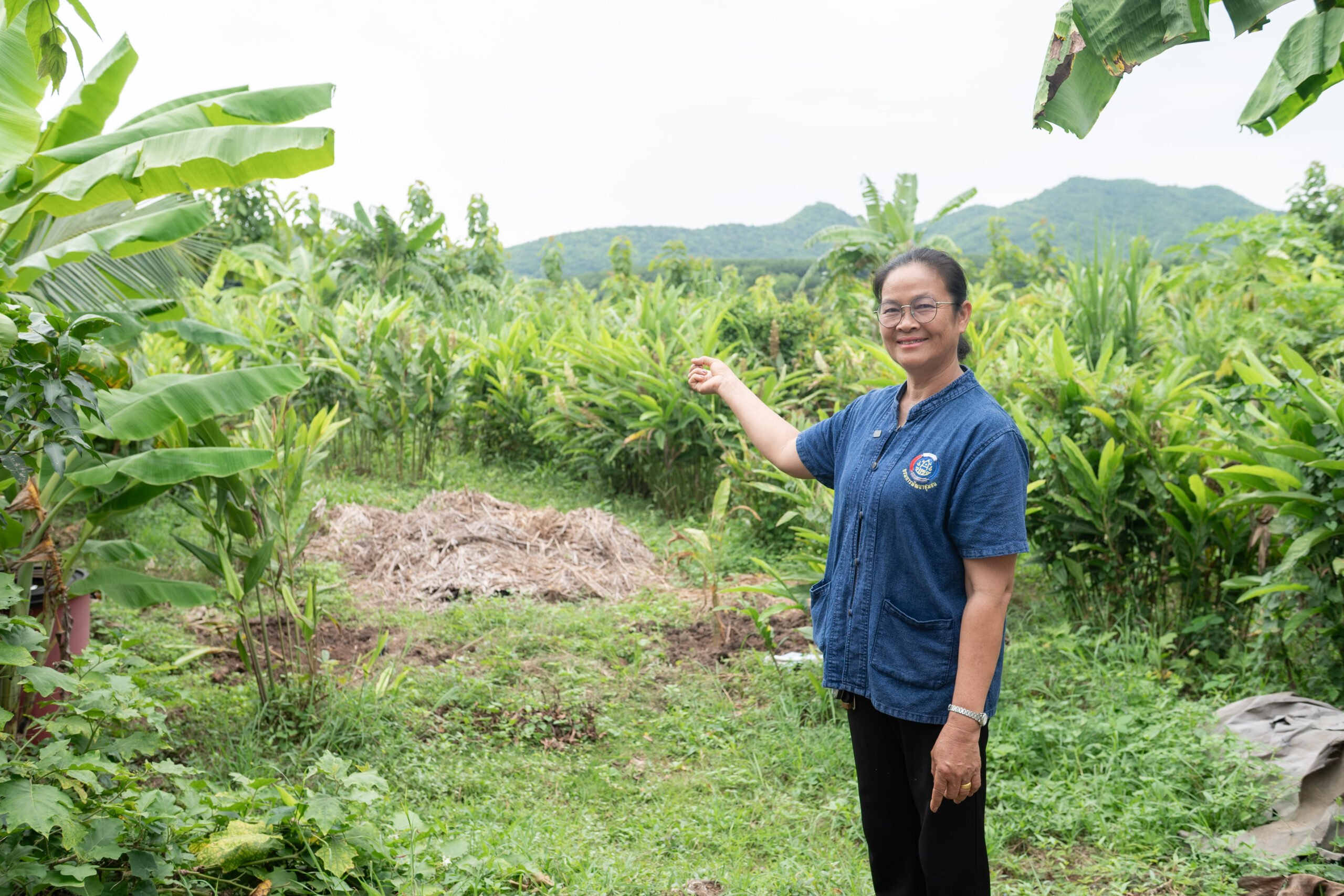
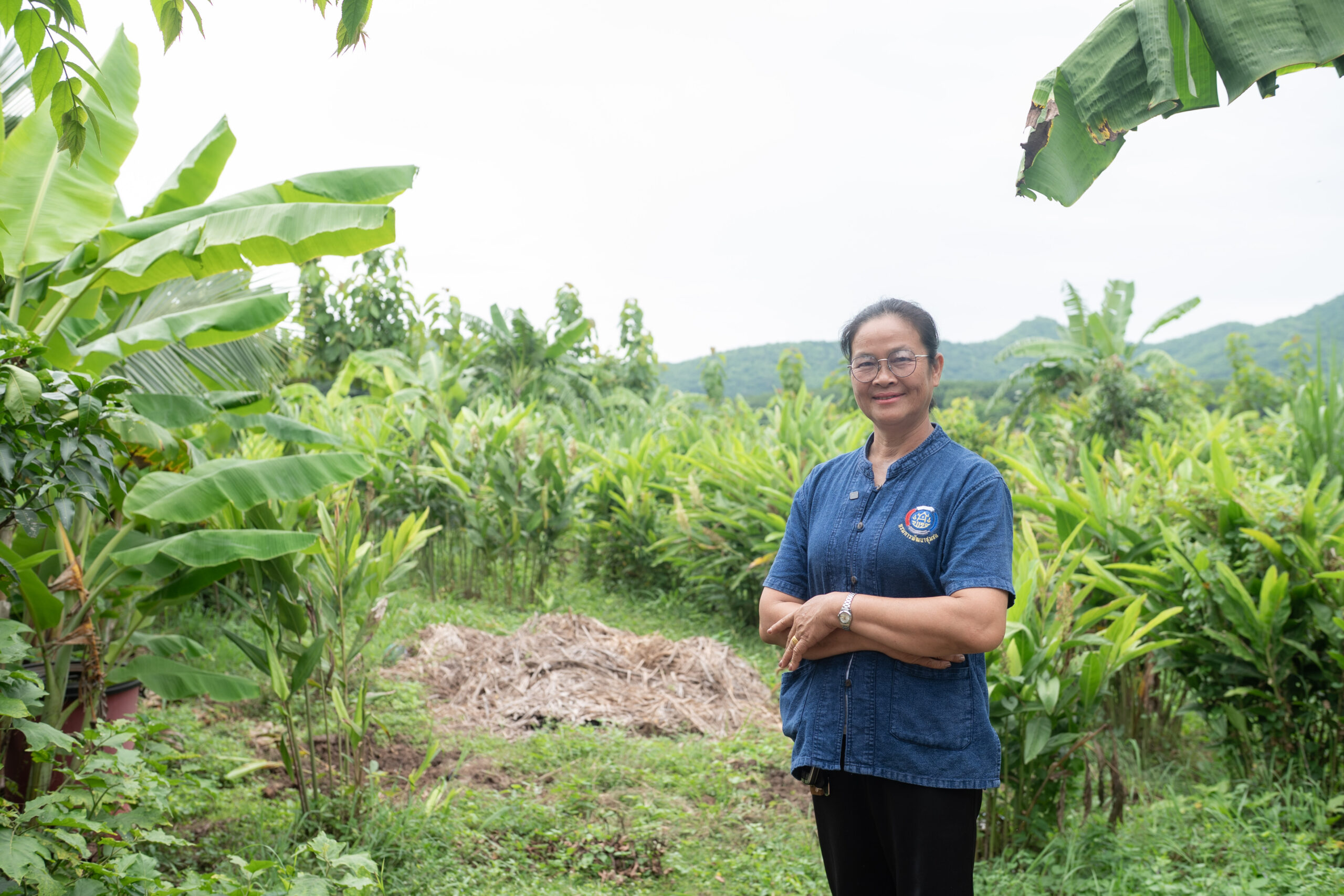
Her inspiration at Khok Nong Na Phak Pha Na Wang Learning Center arises from her love for nature and the happiness of living a simple life close to her family through self-sufficient agriculture. By cultivating vegetables and caring for her farmland herself every day, she has developed a deep bond with the land and finds joy in the changes of nature. At the same time, this lifestyle generates stable income for her family, creating a meaningful life that she wishes to pass on as inspiration to the younger generation in the community.
Key Philosophy:
“Practicing Khok Nong Na is not only about planting crops or raising fish; it is about cultivating people, nurturing ideas, and building true stability in everyday life.”
Knowledge / Expertise / Special Techniques
“Khok Nong Na Model” – An integrated farming approach based on the Philosophy of Sufficiency Economy. This model can be adapted appropriately to one’s own land through:
- Designing agricultural land for maximum benefit, including crop cultivation, fish farming, and water storage.
- Growing local vegetables that are both household-consumable and marketable.
- Utilizing community resources wisely and recycling them sustainably.
Meaning of the “Khok Nong Na Model”
It is a holistic approach to agricultural land management aligned with the Sufficiency Economy Philosophy, derived from the Royal Principles of King Rama IX. The model emphasizes optimal use of natural resources under the concept of “enough to live, enough to eat, enough to use, and enough to share,” aiming for farmers to achieve true self-reliance.
Main Components of Khok Nong Na
- Khok (Elevated Land / Mounds):
- For growing fruit trees, perennials, or diverse crops following agroforestry principles.
- Well-drained and suitable for economic crops such as mango, jackfruit, bamboo, and medicinal plants.
- Nong (Ponds / Water Reservoirs):
- Stores rainwater for use during dry seasons.
- Supports fish, shellfish, crabs, and aquatic plants such as morning glory, water chestnut, or duckweed.
- Helps regulate temperature balance and serves as a natural breeding ground for aquatic life.
- Na (Rice Fields / Seasonal Crops):
- Provides the main staple food for the family.
- After the rice season, the land can be used to grow rotational crops such as beans, pumpkin, corn, or household vegetables for consumption or sale.
Key Principles of the Model
- Self-sufficient land design: Each part of the land works as an ecosystem (e.g., pond water irrigates trees, crop residues become organic fertilizer).
- Efficient use of resources: Food and plant waste recycled into compost or bio-fertilizers to reduce costs.
- Income circulation: Multiple outputs available for household use and sale throughout the year.
- Community employment: Knowledge transfer and local job creation (e.g., fish farming, organic fertilizer production, processing).
- Disaster resilience: Land design with water reservoirs, raised fields, and crop diversity reduces risks from droughts and floods.
Opinions on the Conservation and Development of Local Handwoven Textiles
“The Learning Center does not merely aim to be a place of knowledge but also a hub of hope to restore livelihoods, create careers, and foster sustainable self-reliance. Support from relevant agencies today is not only an investment in a project but also an investment in the quality of life of the community for the future.”
69, Village No. 6, Na Lao Sub-district, Na Wang District, Nong Bua Lamphu Province, 39170
Phone 089 – 9448950