

Inspiration
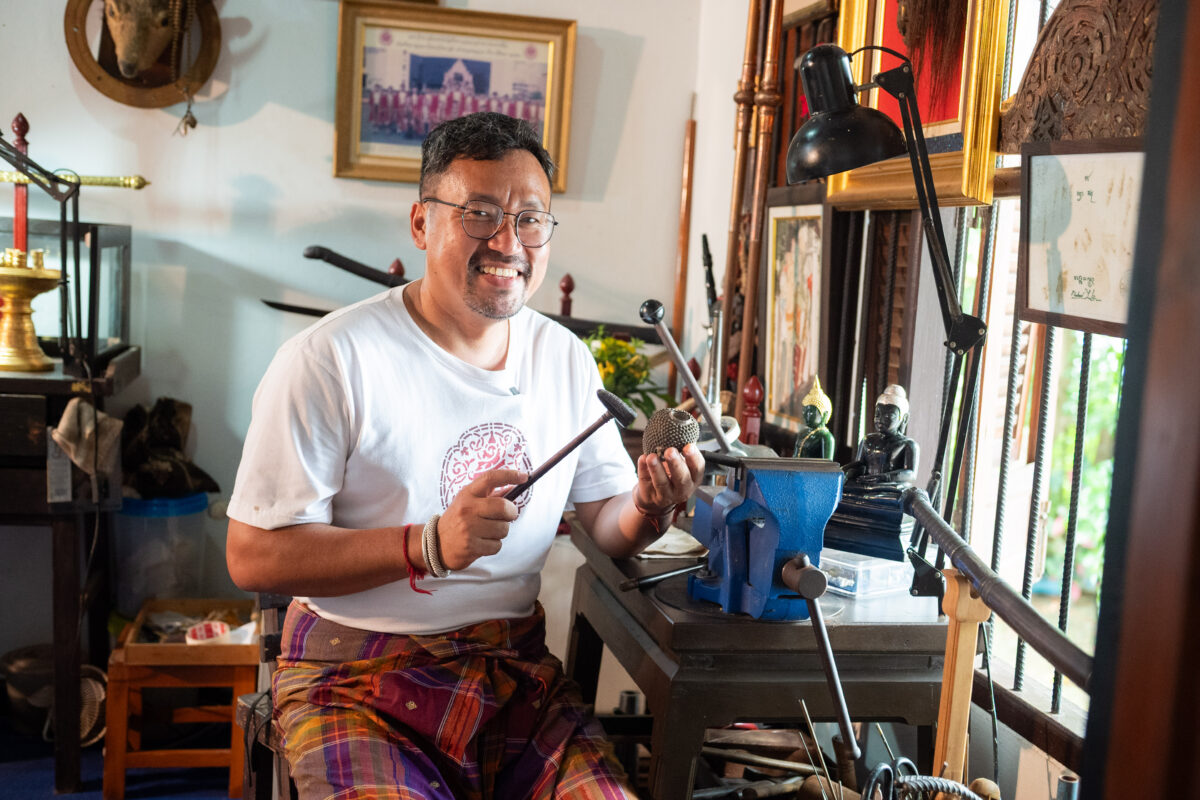
Mr. Pasit Saengsoda is deeply passionate about the beauty of local arts and culture, particularly traditional handicrafts and artisanal work of Isan. Having been involved with craftsmanship since childhood, he came to recognize both the spiritual and economic value of folk art, which is gradually disappearing over time.
His greatest inspiration lies in the determination to preserve and extend the legacy of local artistic craftsmanship, bringing it into modern relevance. This vision led to the founding of Hong Kham Suwanna Chettha Academy as a learning center connecting:
Science: Technical and artisanal knowledge
Art: The beauty of craftsmanship
Locality: Community life and traditions
Gold (Suwanna): Symbolizing prosperity and the refinement of goldsmithing traditions
The academy serves as a place of learning, knowledge transfer, and inspiration for younger generations
Knowledge / Expertise / Special Techniques in Product Crafting
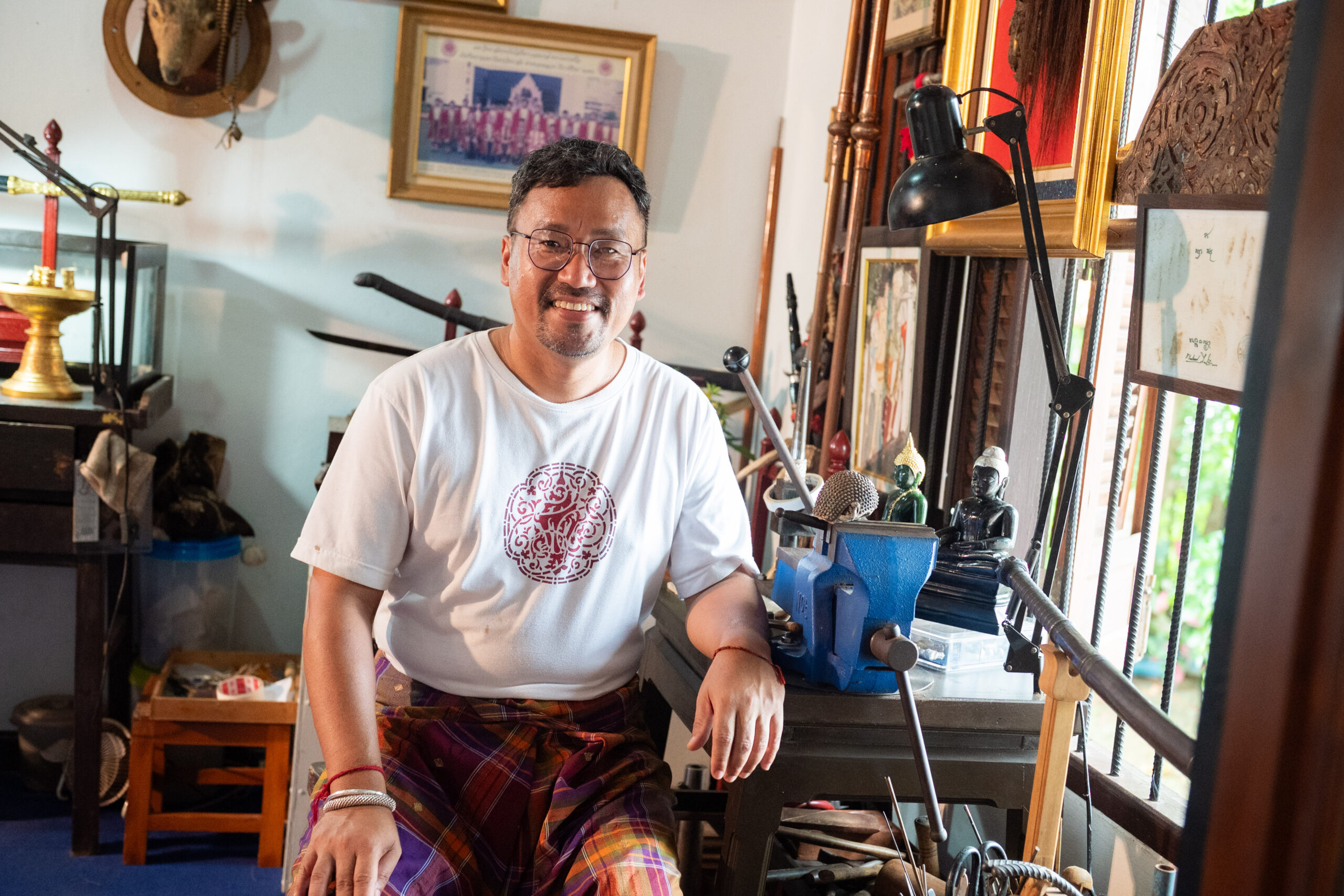
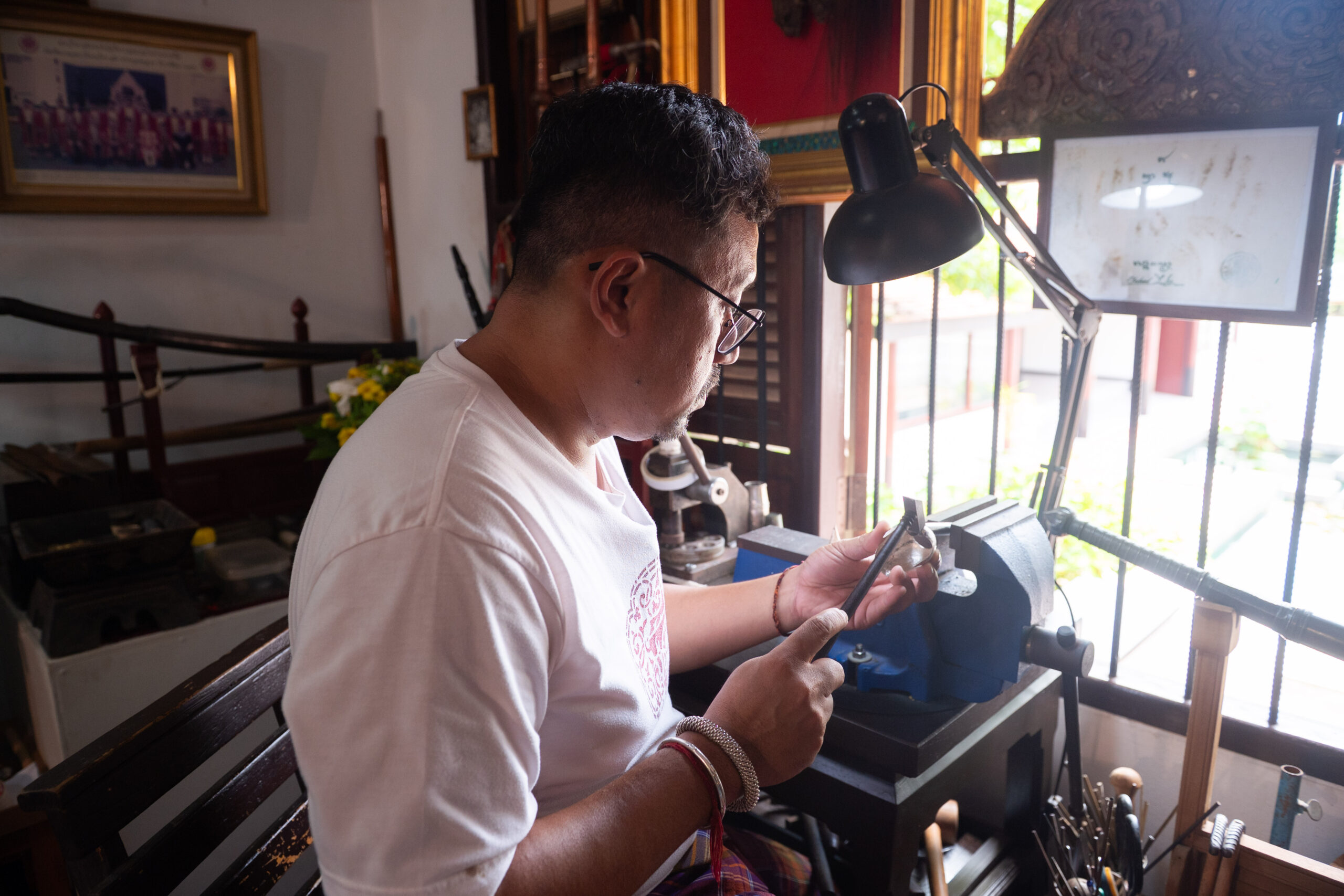
Mr. Pasit has in-depth expertise in jewelry making and goldsmithing within the local Isan tradition, which distinguishes itself from urban goldsmithing by emphasizing simplicity, hidden details, and symbolic meaning in every motif.
Key Areas of Expertise:
- Designing motifs inspired by local beliefs
(e.g., Naga patterns, spiral vines, and Puttan flowers—each rooted in Isan legends, lifestyles, and beliefs). - Intricate jewelry crafting techniques
Using ancient methods such as chiseling, engraving, and repoussé (metal embossing), emphasizing handcrafting rather than machinery to preserve authenticity. - Blending local materials with precious metals
Incorporating handwoven fabrics, wood fragments, or natural stones with gold, copper, and silver to create jewelry that tells a meaningful story. - Knowledge transmission and trainingConducting hands-on workshops for youth, apprentices, and villagers—fostering not only artisanal skills but also cultural understanding
Perspective on Preserving and Developing Local Products
He believes that preserving and developing local handwoven textiles should not be limited to oral transmission or local-only learning. Instead, the accumulated knowledge at the academy should be compiled and published in the form of books or knowledge manuals, ensuring broader accessibility for interested individuals without the need to physically visit the site. Such books would become valuable sources of learning and serve as a repository of wisdom—preserving, transmitting, and extending knowledge across generations. Even in the absence of successors or living experts, the “traces of knowledge” would remain, allowing future learners to study, develop, and innovate independently
202, Village No. 8, Suwannakhuha Sub-district, Suwannakhuha District, Nong Bua Lamphu Province, 39270
Phone 080 – 0805665