

Inspiration
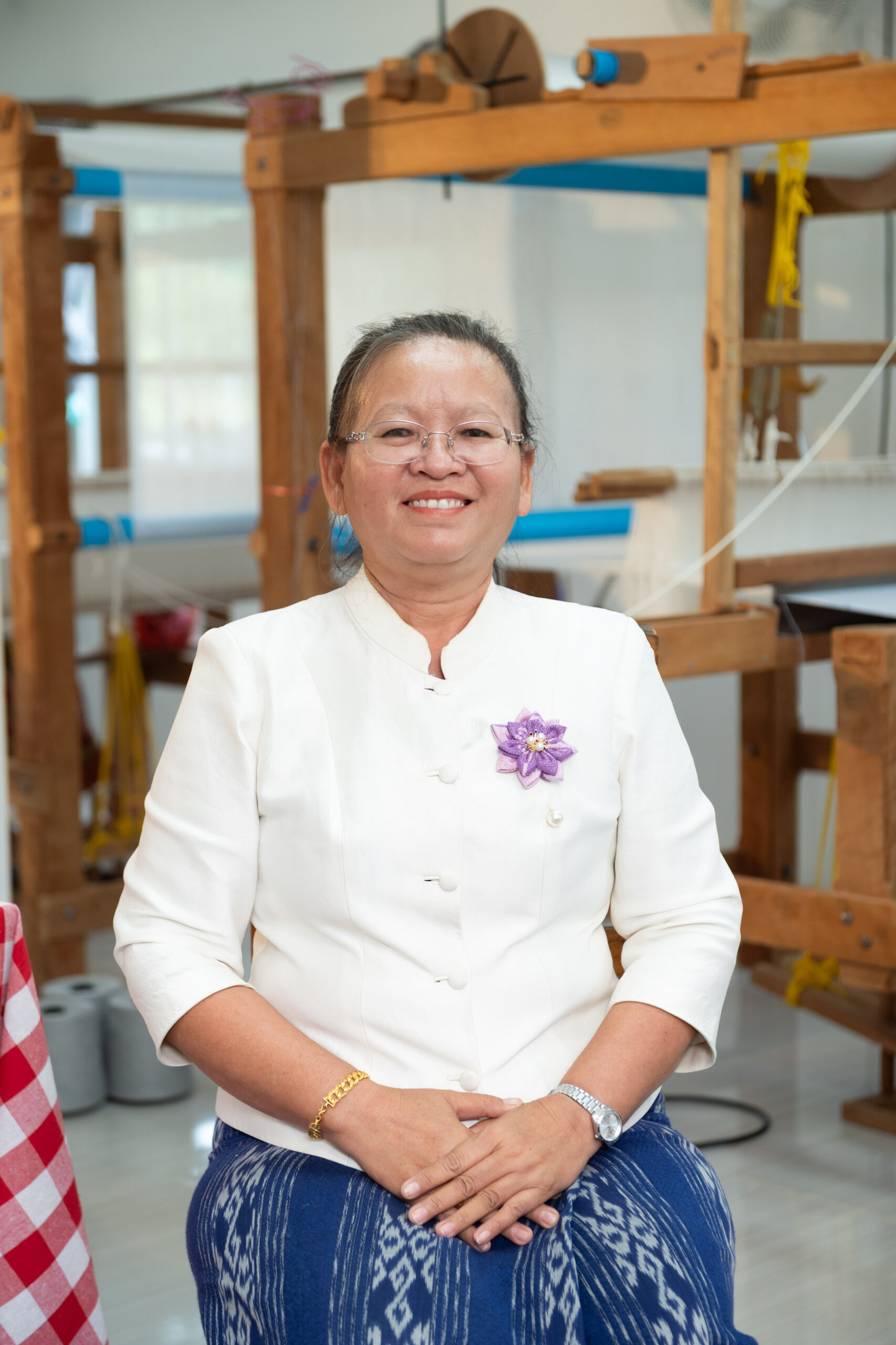
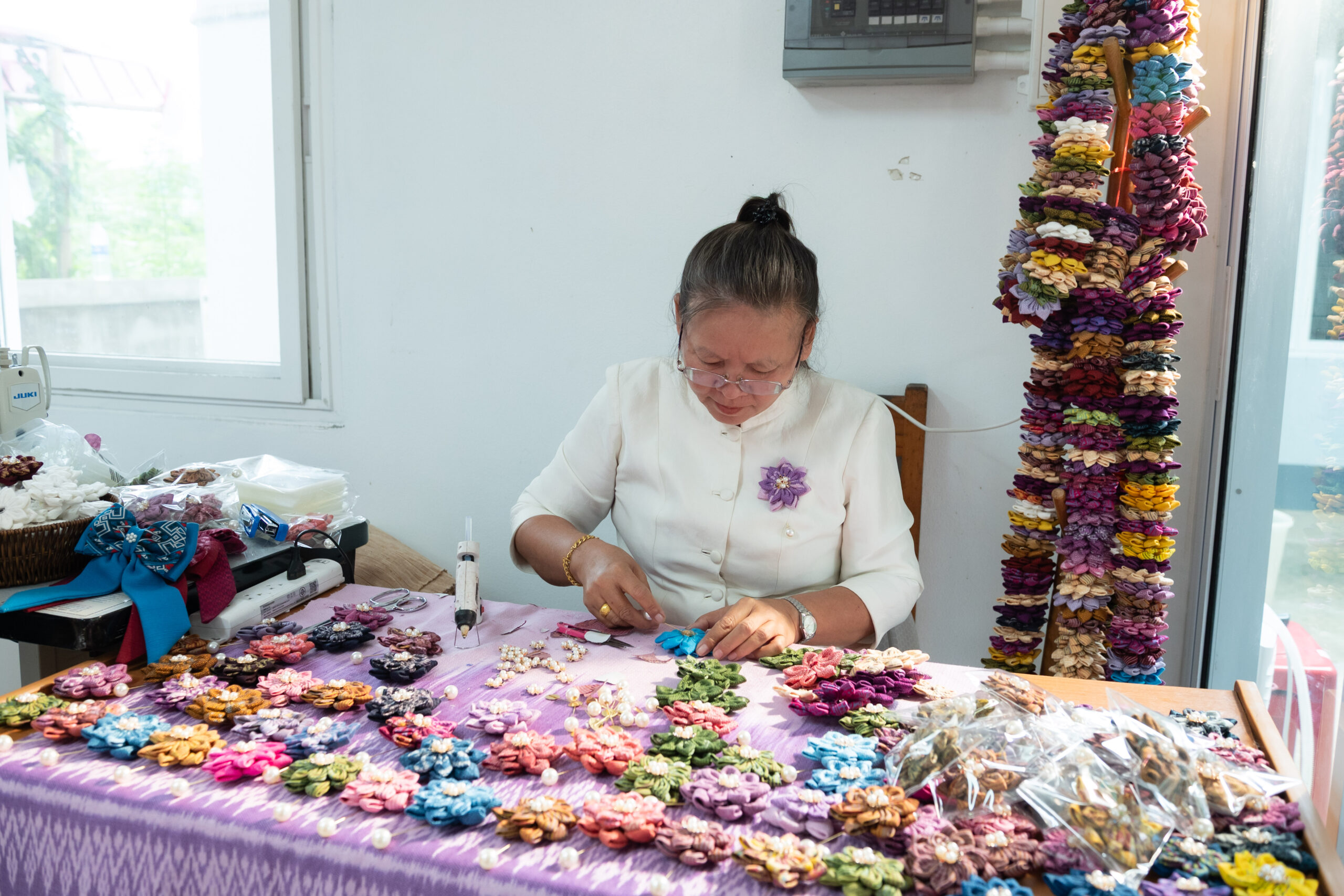
The inspiration began with the idea of “seeing value in what others overlook.” Observing the leftover fabric scraps from weaving and tailoring, she felt regret that these materials were often discarded as waste, contributing to pollution. This sparked her determination to reuse fabric scraps to their fullest potential. From this idea, she developed new handmade products such as fabric brooches, artificial flowers, hair bows, and keychains. These not only reduce waste but also generate income for her family, while being further extended as supplementary occupations for villagers in the communityง
Knowledge / Expertise / Special Techniques in Textile Work
Reusing fabric scraps to maximize value is one of the core approaches of the Handwoven Textile Learning Center, promoting resource efficiency and community income generation. Transforming scraps into fabric flowers, bows, souvenirs, and keychains requires specialized skills in cutting, folding, sewing, and decorating to enhance beauty and create added value.
- Fabric Flower Techniques
- Fabric selection: Cotton scraps, indigo-dyed pieces, or local textiles with suitable flexibility and contrasting colors.
- Cutting petals: Drafting patterns on paper, then cutting fabric into petal shapes (single or layered).
- Folding & sewing: Using pleating or rolling techniques, then stitching neatly to give depth and dimension.
- Assembly: Arranging petals around a center, decorated with buttons, beads, or pom-poms as stamens.
- Hair Bow / Gift Decoration Techniques
- Cutting scraps into rectangular strips for the bow base and center wrap.
- Ironing fabric to create structure and ease of pleating.
- Folding layers into shape and stitching at the center to hold form.
- Decorating with lace, embroidered names, or ribbons for uniqueness.
- Attaching securely to clips, hairpins, or gift boxes with hot glue or stitching.
- Souvenir Techniques
- Designing small items that use minimal fabric, such as mini pouches, coin purses, or tiny dolls.
- Hand-sewing with fine stitches, enhanced by small embroidery details or fabric labels.
- Adding decorative fabric flowers, beads, or personalized tags for special events.
- Fabric Scrap Keychain Techniques
- Selecting simple shapes like hearts, stars, leaves, flowers, or tiny dolls.
- Cutting two identical fabric pieces, sewing them together, leaving space for stuffing.
- Filling with fiber for a slightly puffy effect, then stitching closed.
- Attaching a ribbon loop or fabric strap, secured to a metal keyring.Adding details with embroidery, brand labels, or colorful edging stitches
Opinions on the Preservation and Development of Local Textiles
She emphasizes the importance of preserving local wisdom while also promoting sustainable livelihoods within the community. Handwoven crafts, fabric-based products, and creations from recycled materials can become valuable supplementary occupations, generating real income.She also envisions ongoing and accessible vocational training programs—whether through hands-on workshops, mentorship from community masters, or peer learning within groups. This would ensure the broad distribution of knowledge, skills, and income across surrounding communities, leading to sustainable development and collective participation.
89, Village No. 5, Muang Mai Subdistrict, Sri Bun Rueang District, Nong Bua Lamphu Province, 39180
Phone 087-2302809