

Inspiration
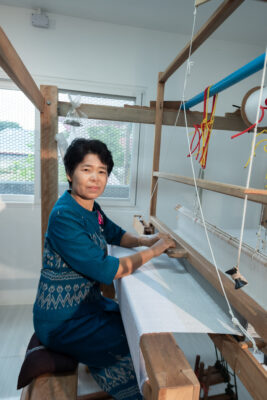
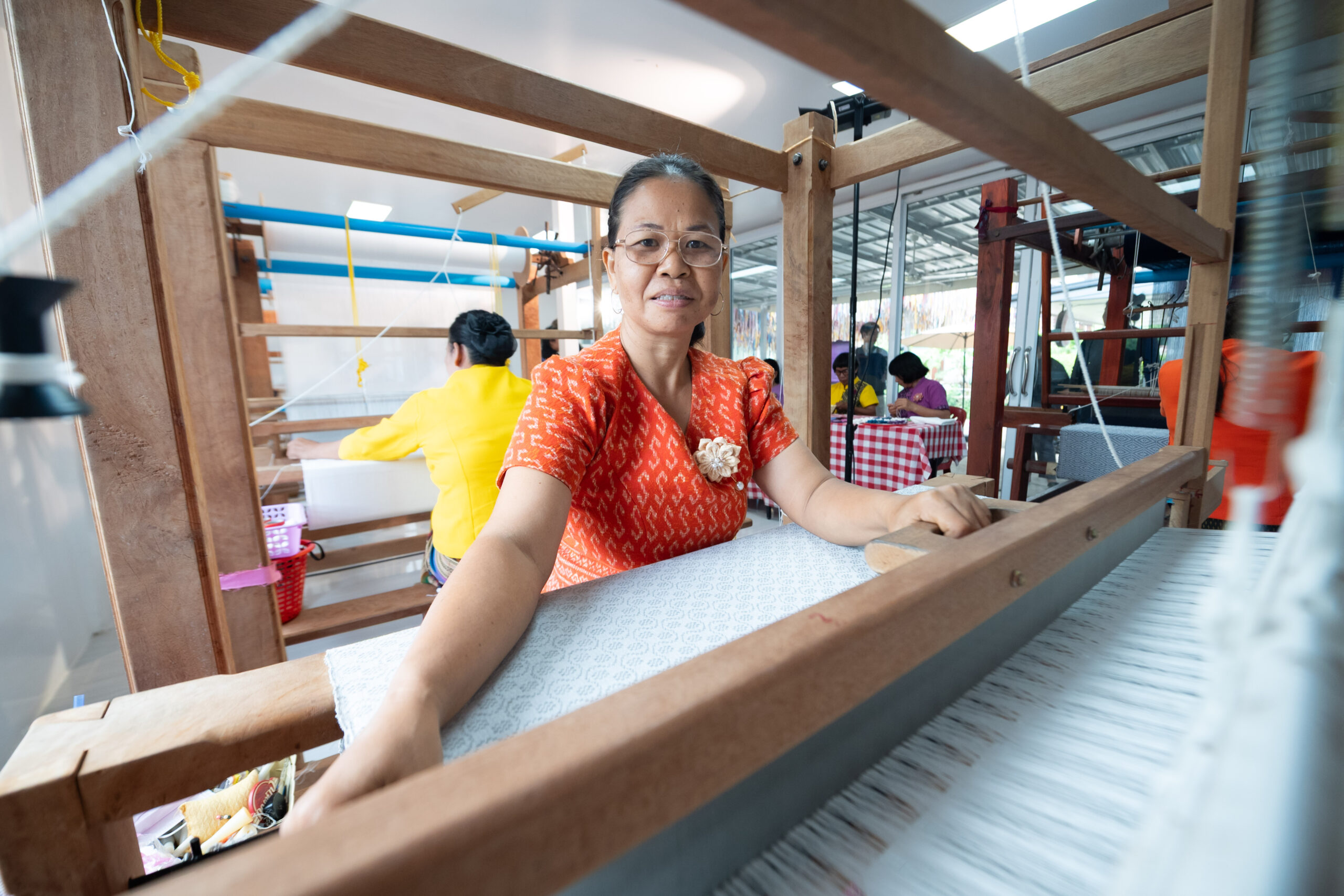
Beginning: From the family loom to a livelihood Her journey started within her family, where she was taught weaving from a young age. What began as a playful family activity gradually became a natural skill absorbed over time. Later, local occupational promotion projects helped her realize that handwoven textiles could generate real income. Seeing this opportunity, she decided to pursue weaving seriously, improving her skills to provide supplementary income for her family and community.
Knowledge / Expertise / Special Techniques in Textile Work
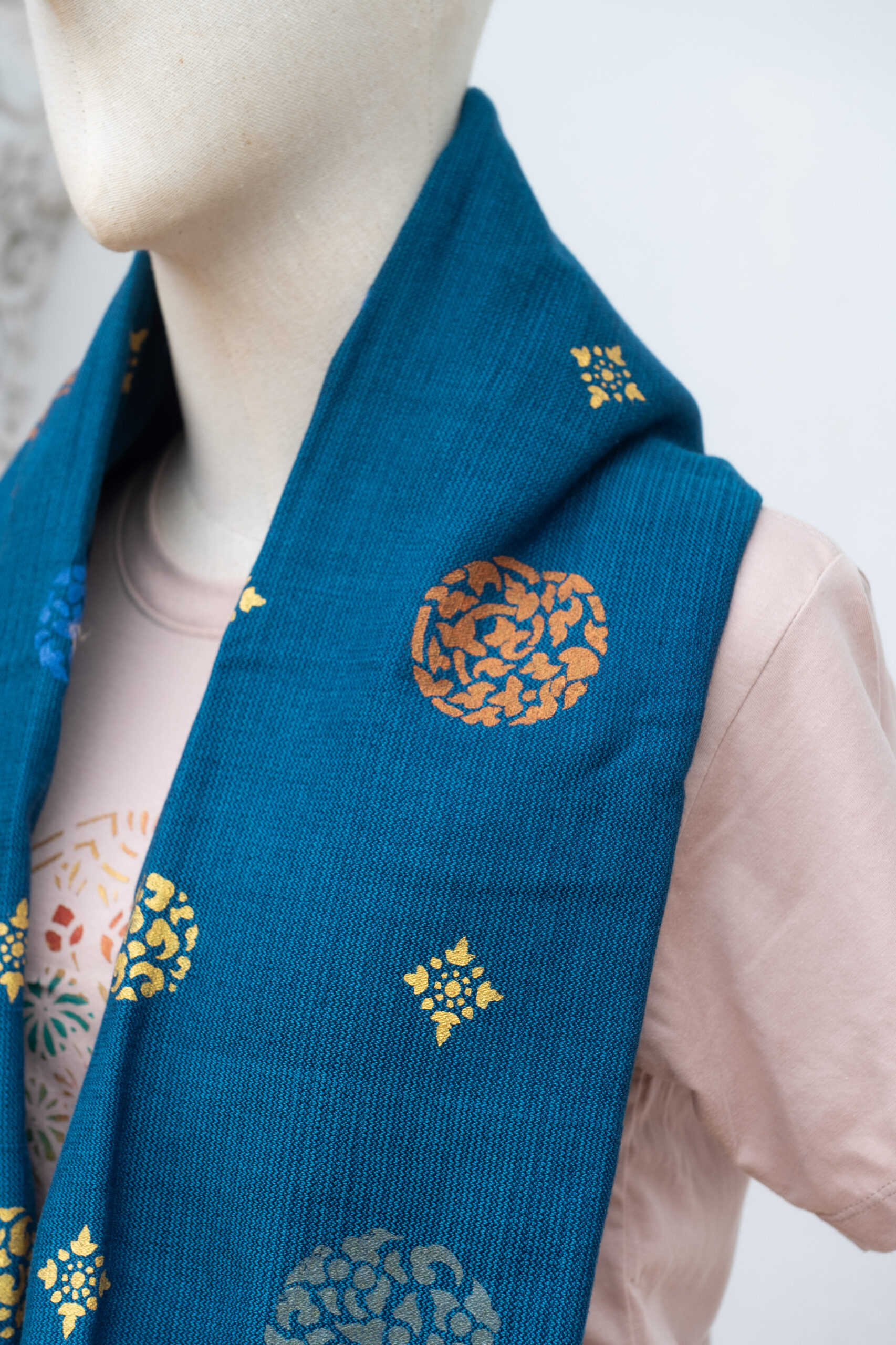
For her, patterns on handwoven fabrics are not mere decorations but a “language” that conveys stories, ways of life, and local beliefs. With wisdom passed down through generations, she developed unique techniques in designing meaningful and valuable patterns through the following approaches:
Visual Memory & Observation
Learning by watching and memorizing patterns from ancestors, then recreating or innovating designs with accuracy and intuition.
Pattern Structuring
Analyzing the framework of each design—such as width, number of warp threads per segment, and treadle rhythm—to ensure clarity, balance, and adaptability of scale.
Cultural & Natural Inspiration
Drawing from the environment and traditions, such as:
• Flowers, leaves, and plants (e.g., Dok Kaew, Dok Jik)
• Local animals (e.g., Naga, spider motifs)
• Beliefs and rituals (e.g., Teen Jok, Med Khanun motifs)
These often carry auspicious meanings of love, stability, and protection.
Pattern Adaptation & Innovation
Blending two motifs into one fabric.
Adjusting rhythm for compactness or fluidity.
Overlaying patterns or breaking sequences for dynamic visual movement.
This preserves cultural roots while opening opportunities in contemporary markets.
Color & Texture Blending
Carefully selecting threads to enhance pattern highlights, using natural shades (indigo, brown, brick red) or combining silk, cotton, metallic threads, or glossy yarns for depth and elegance.
Expertise in Treadle Setting
Mastery in arranging treadles across multiple systems, from Khid and Jok to layered treadles, to achieve intricate, high-precision designs.
ความคิดเห็นเกี่ยวกับการอนุรักษ์และพัฒนาผ้าทอท้องถิ่น
She believes it is crucial to encourage the new generation to play a greater role in preserving textiles. Young people are a powerful force in carrying forward local wisdom while adapting it to modern times through design, product diversification, marketing, and digital communication. With the right support and creative space, local textiles will not only “survive” but also “thrive” sustainably, strengthening both cultural roots and future opportunities.
19, Village No. 5, Muang Mai Subdistrict, Sri Bun Rueang District, Nong Bua Lamphu Province, 39180
Tel. 080 – 7290495