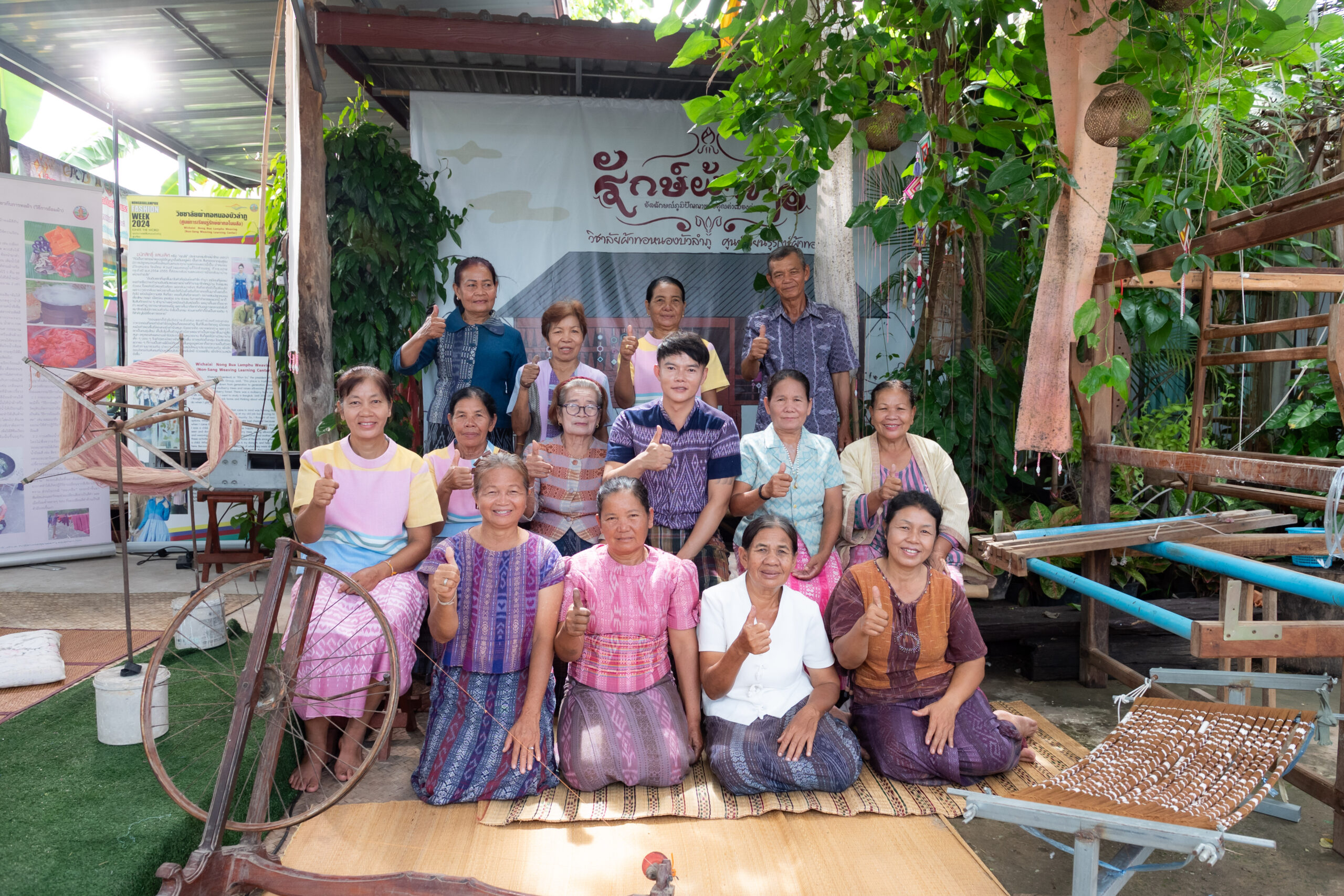
Mr. Khanatsit Sonloet, also known as Soh, is a man with a deep love for local wisdom and an appreciation for the cultural heritage of traditional weaving.

          In the past, the community of Ban Non Sang was well known for traditional silk and cotton weaving, a craft passed down through generations. Nearly every household cultivated mulberry trees, raised silkworms, and wove cloth for family use. Weaving was not only a household practice but a way of life, deeply rooted in the local culture. In earlier times, this area was once a major mulberry plantation, home to silk-reeling houses and an important hub for silk thread production.

          Growing up surrounded by this heritage, Soh carried these images with him since childhood. Although he later pursued studies and work in the capital city, a turning point in his life brought him back home with the question: “What should I do next?” Rather than following in his parents’ footsteps in agriculture alone or continuing conventional work, he discovered that the true treasure of his community lay in its cultural heritage—handwoven textiles. However, this treasure lacked structured support in terms of group organization, design innovation, and modern marketing.

          With the weaving skills he had once practiced alongside his grandmother and mother, he began experimenting with contemporary fabric designs. His creations were eventually entered into competitions, winning several awards. These successes became the true starting point of his motivation.

          From those small beginnings, Soh gathered skilled community members—masters of the craft—to establish the “Rak Pha Thai Group.” Their clear vision was to integrate traditional knowledge with the creativity of the younger generation, developing designs and products that meet the needs of modern consumers while preserving the community’s cultural roots.
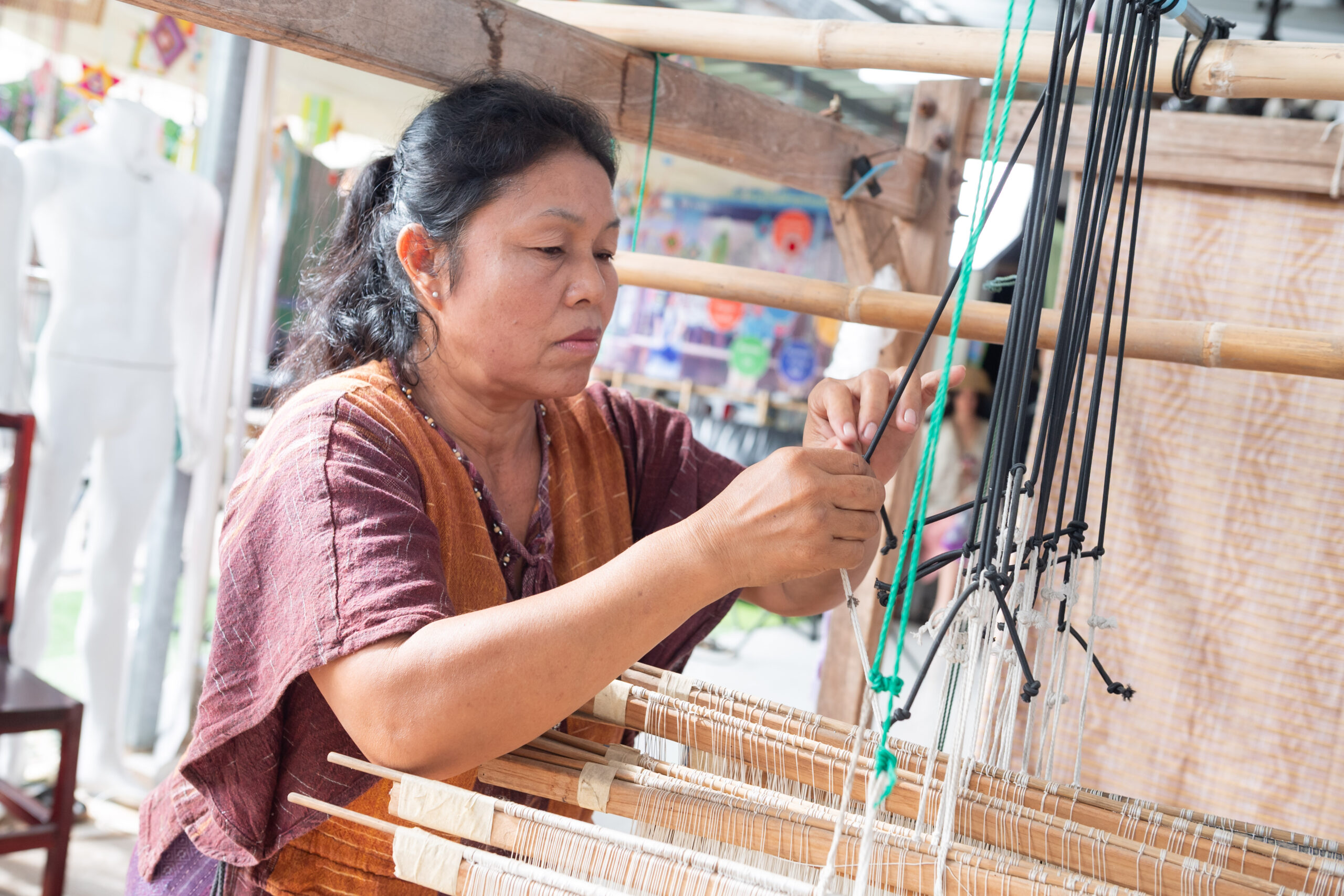
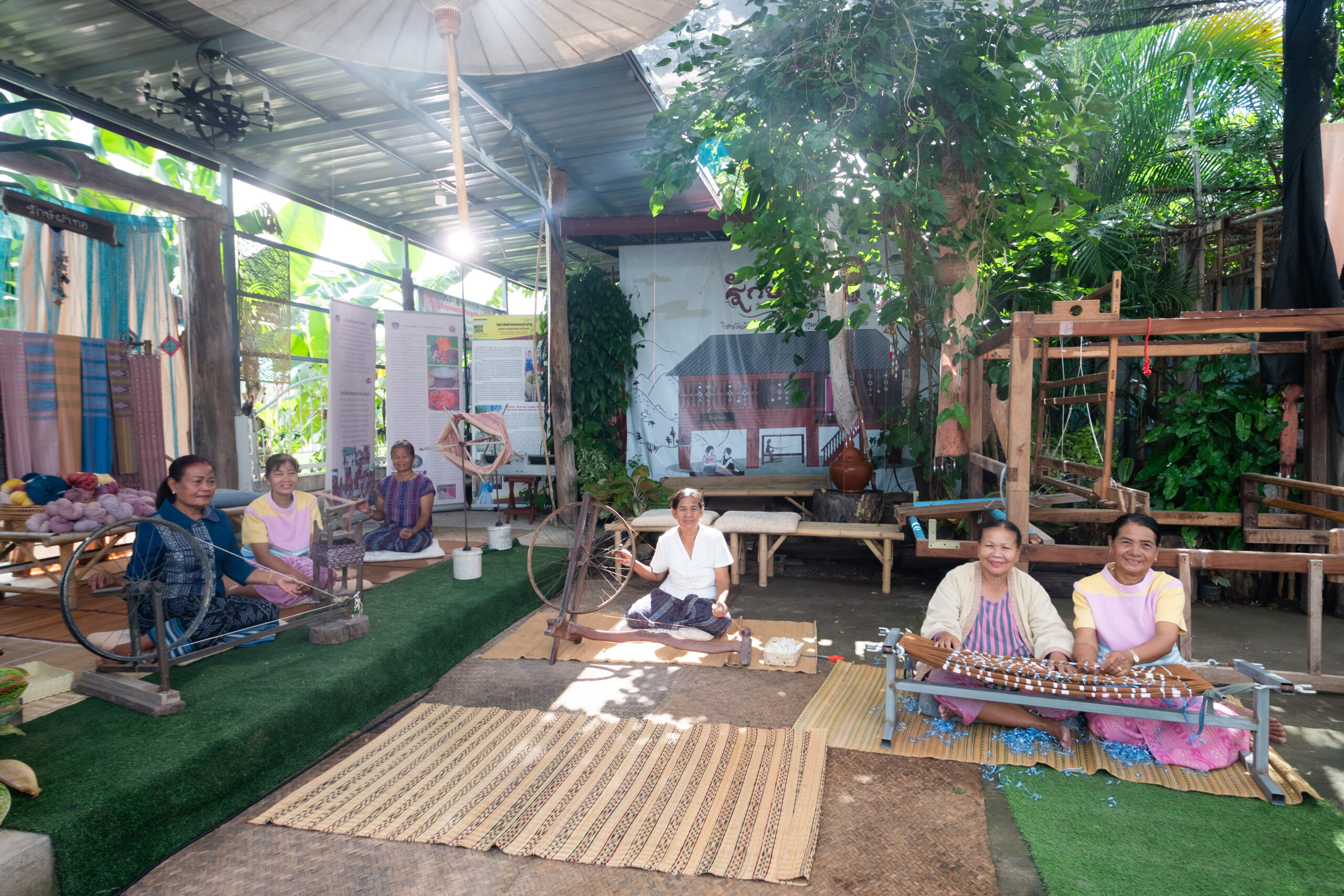
Thus, the group was born from the spirit of returning to one’s roots. Today, it serves as a living learning center for textiles, a space for transmitting local knowledge, and a model for community economic development driven by cultural heritage.

Operational Approach of the Weaving Academy

Production
Members are able to work from their own homes, allowing them to manage household responsibilities alongside creating their products. This approach reduces central operating costs, such as utilities, and provides flexibility in the working process.

Coordination Center
The group’s premises serve as the hub for meetings, coordination, order processing, and organizing activities. However, the main production processes are decentralized and carried out within the community.

Status as an Upstream Producer
The group plays a vital role as a producer of high-quality woven fabrics, which are supplied to designers or fashion houses. This ensures income is generated directly from raw materials and traditional knowledge.

Dual Role as Entrepreneurs
In addition to being producers, community members also act as their own intermediaries or traders. This enables income circulation to remain within the community, fostering local economic sustainability.

Strengths of the Witthalai

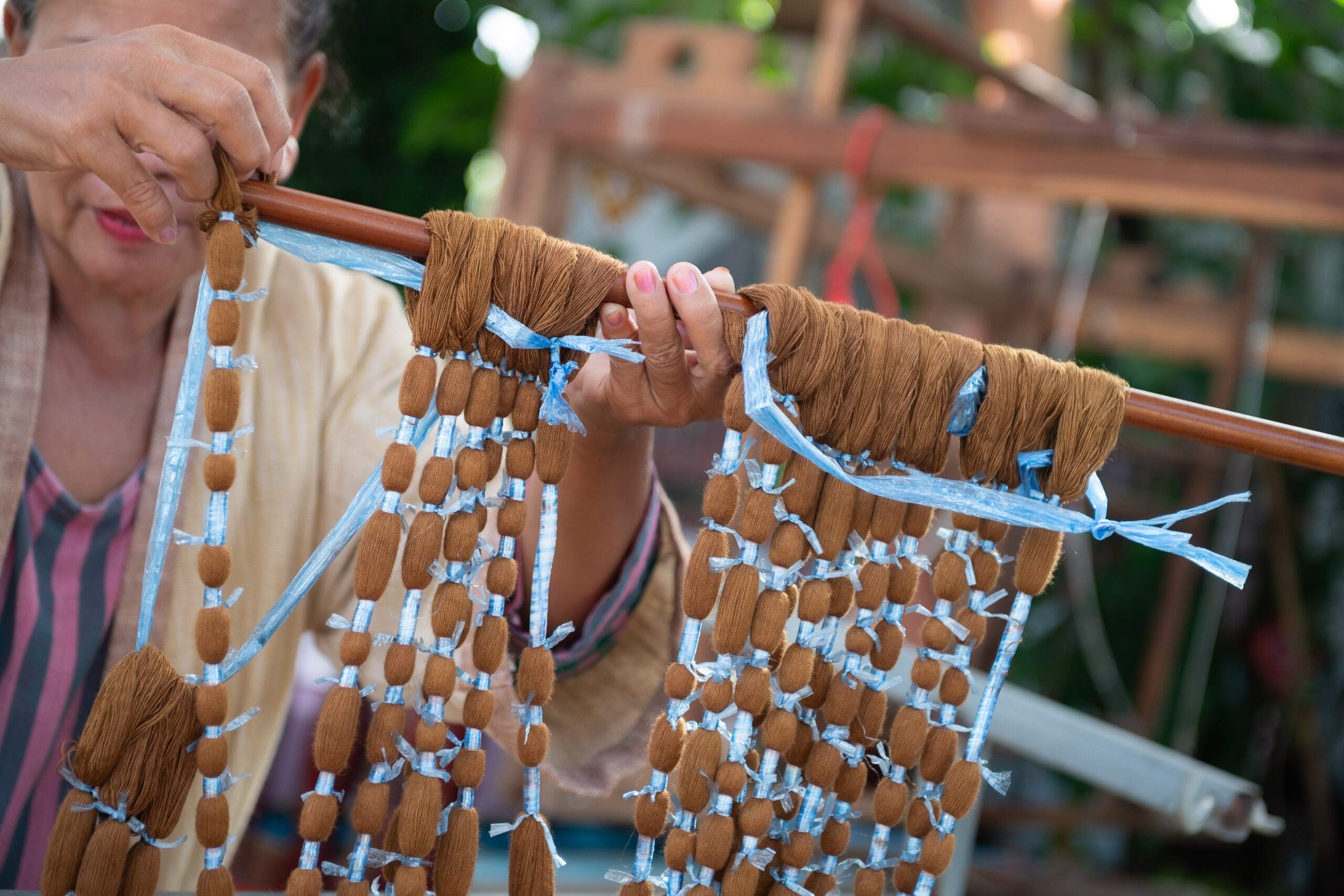
       The group possesses expertise in the entire process of traditional textile production, ranging from cotton carding, spinning, dyeing, and ikat (mudmee) preparation, all the way to weaving. The group is supported by key master artisans with extensive knowledge and skills, such as Mae Khanta Sanlert and Mae Pinthong Sanlert, who play vital roles in creating high-quality textile works.

Activities and Learning Courses (Workshops)

1. Natural dyeing using local materials, such as indigo dyeing.
2. Courses on ikat (mudmee) techniques and creative pattern design.
3. Training in khit weaving and heddle lifting techniques.
4. Basic activities, such as spinning yarn and cotton cultivation.
5. Fabric painting activities using indigo for tourists or interested participants.