

LOOM PHU Textile Academy was founded from the inspiration to preserve and revitalize the traditional weaving heritage of Nong Bua Lamphu Province, particularly in Si Bun Rueang District, where weaving has been passed down through generations. This is the fifth weaving academy of the province, officially launched on September 26, 2024, at Ban Chomphu Thong, Muang Mai Subdistrict, Si Bun Rueang District, Nong Bua Lamphu Province.
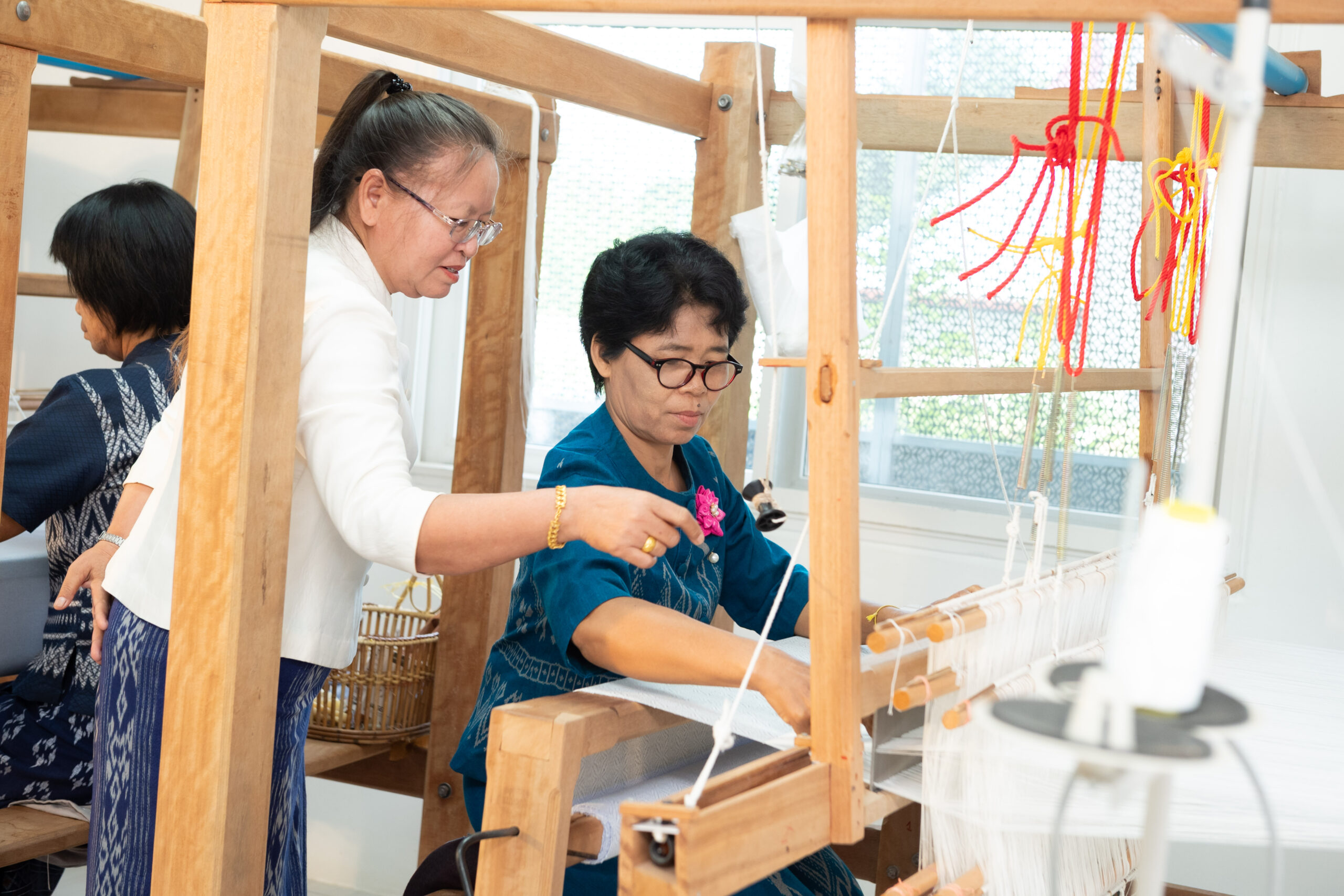
The concept of establishing LOOM PHU Textile Academy began with a group of local artisans and designers who recognized that although handwoven textiles carry cultural value, they have been losing their place in the daily lives of younger generations. The academy was therefore created as a shared learning space for all ages, bridging traditional wisdom with modern design that responds to contemporary markets.
Additionally, LOOMPHU Academy has received strong support from the Provincial Community Development Office, local organizations, and design networks to promote the vision of “Textiles of the Future”—not only beautiful, but also sustainable and capable of providing stable income for the community.
Operational Framework
LOOM PHU Textile Academy operates under the concept of “Preserve, Create, Sustain”, focusing on linking traditional wisdom with contemporary innovation through three main approaches:
- Preservation
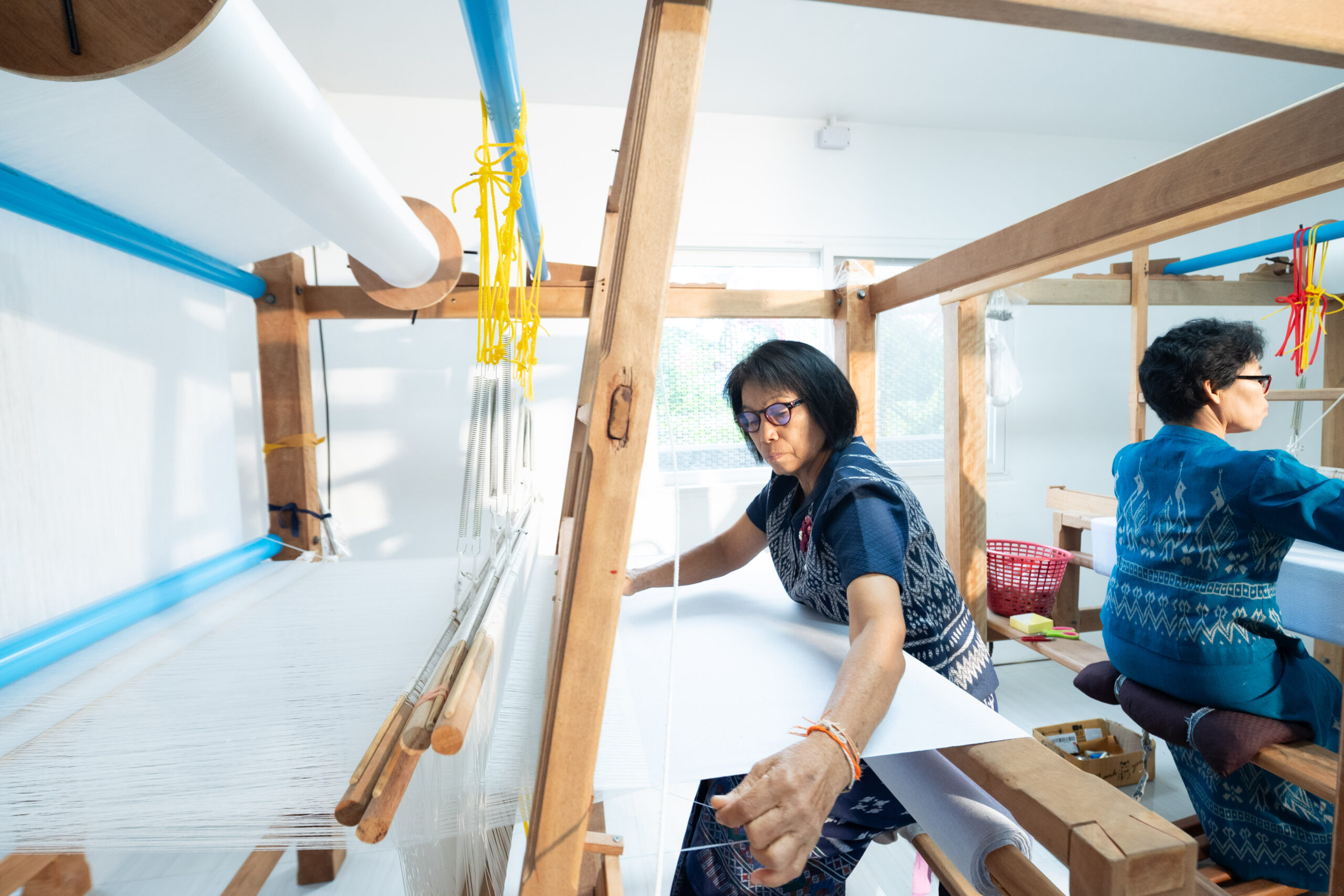
– Collect knowledge of local weaving from elder master weavers.
– Provide spaces for artisans to transfer skills to younger generations.
– Use traditional weaving methods such as local handlooms, ikat weaving, and natural dyeing. - Creation
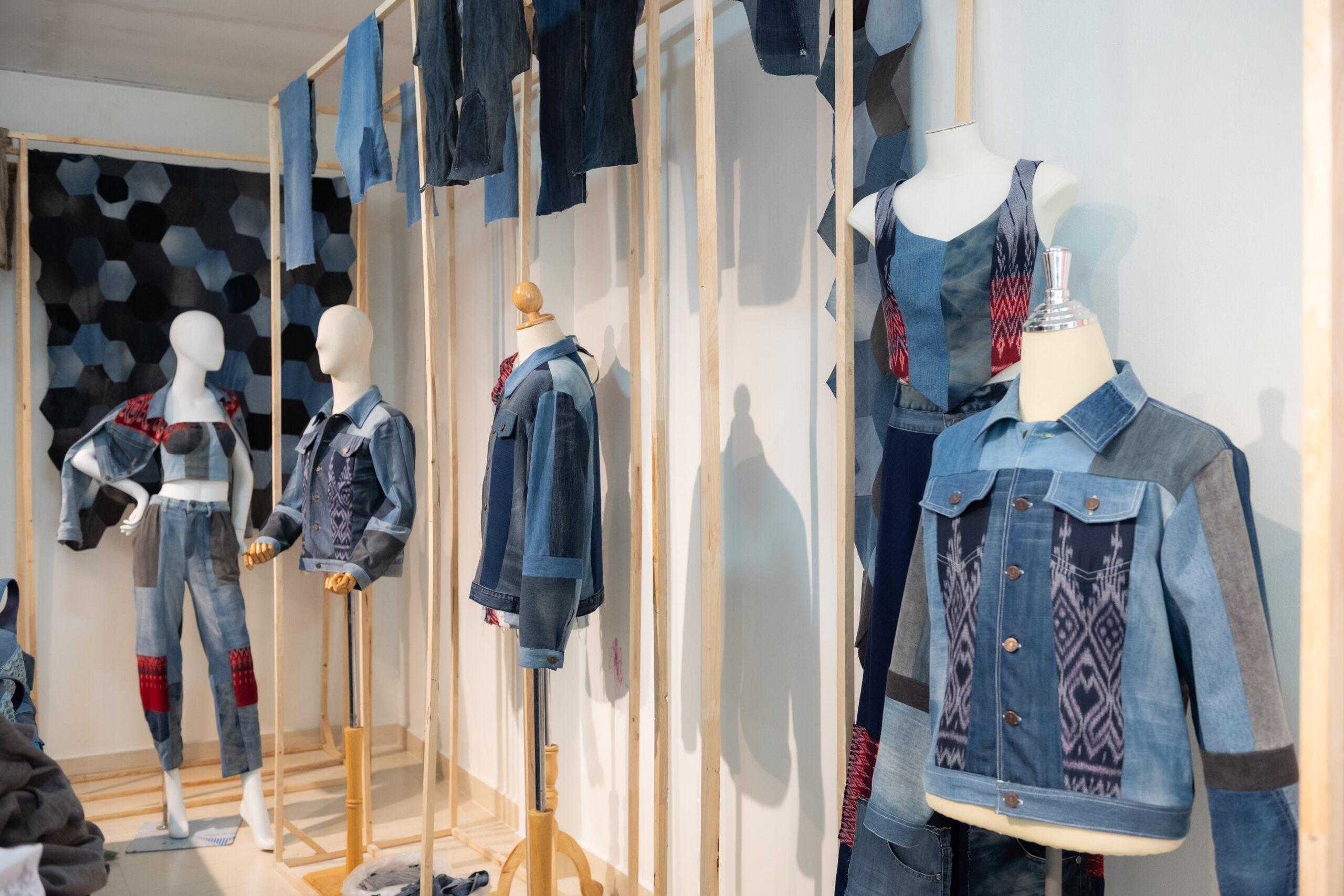
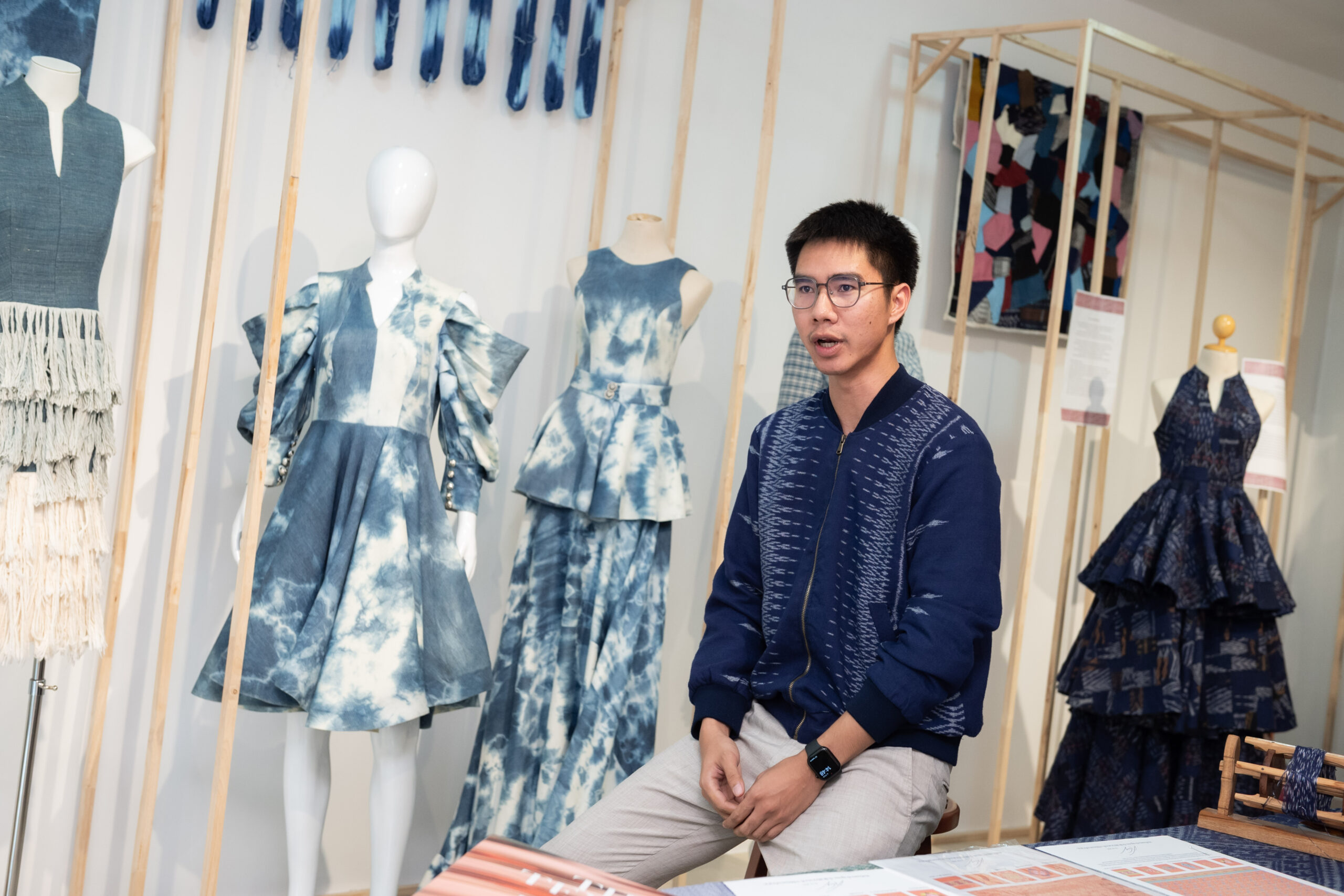
– Collaborate with young designers to develop contemporary fashion from woven fabrics.
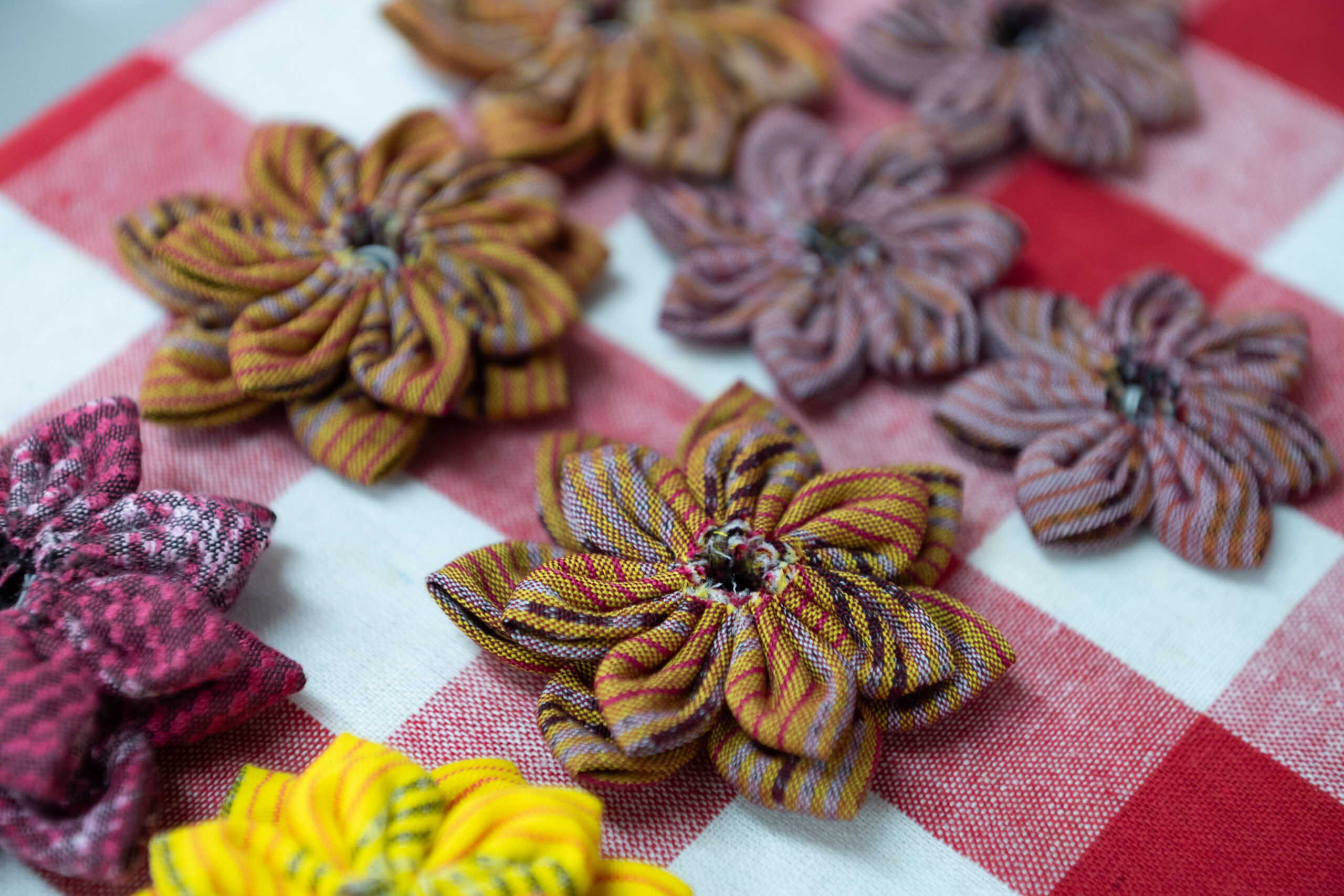
– Diversify textile applications into products such as workwear, bags, souvenirs, and home décor.
– Encourage redesign of leftover fabrics through Upcycling and Zero Waste Design. - Sustainability
– Develop community livelihoods from weaving, such as occupational groups and online markets.
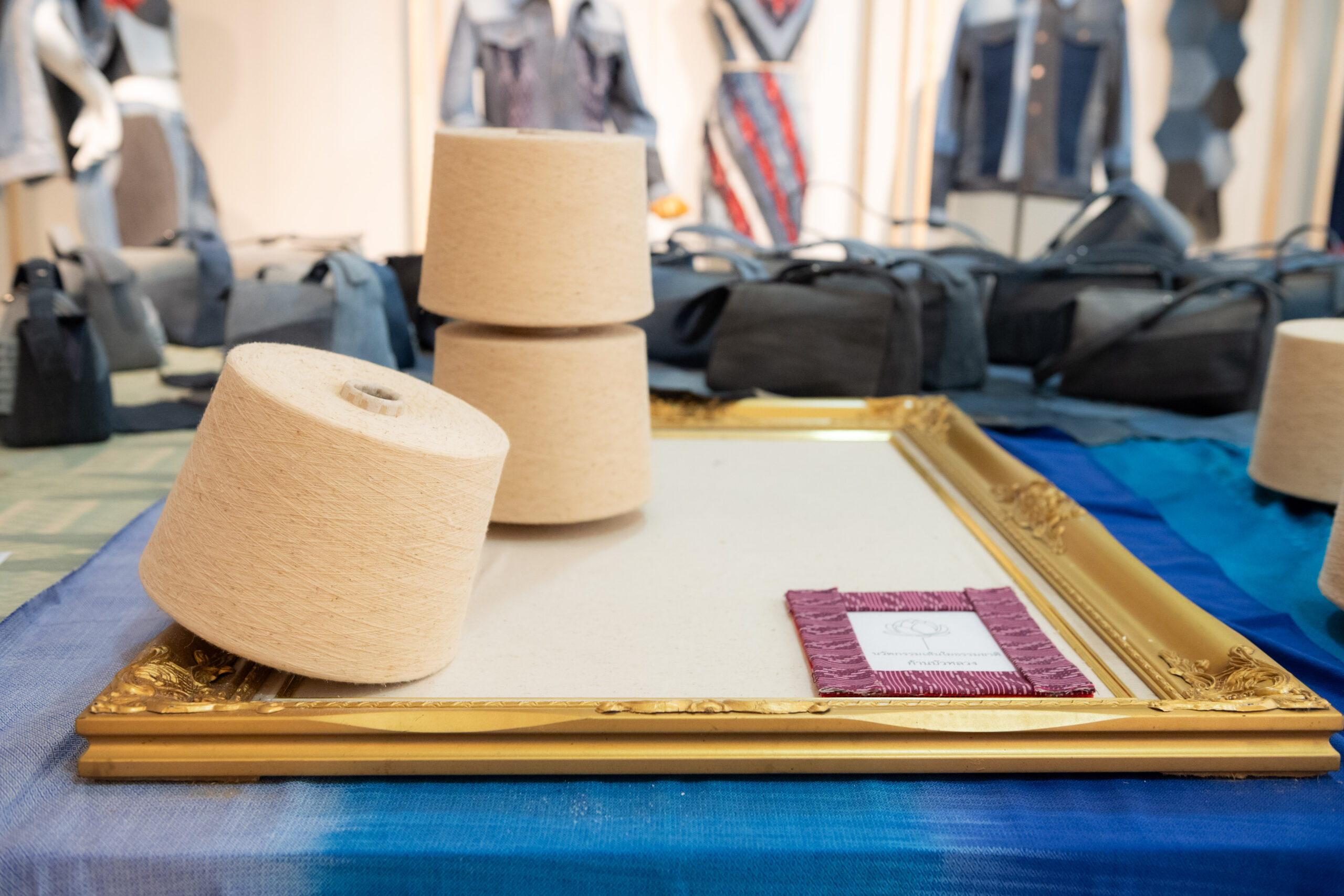
– Promote the use of natural fibers (e.g., handspun cotton, natural dyes from leaves, bark, and silk cocoon shells).
– Emphasize eco-friendly, chemical-free production processes.
Key Strengths of LOOMPHU Academy
- Bridging Culture and the Future – not only preserving textiles, but adapting them for modern lifestyles (e.g., work shirts made from handwoven fabric).
- Material Innovation – e.g., recycled fibers from old silk fabrics, blending natural fibers such as cotton and silk cocoon shells.
- Contemporary Design – combining new sewing techniques such as smocking, exposed seam stitching, and menswear workwear silhouettes.
- Participatory Development – everyone has a role: children help sort fabrics, the elderly join dyeing, and the younger generation manages online sales.
- Community-driven Inspiration – the academy belongs to the people, with everyone acting as true drivers of change.
Learning Structure
The academy’s curriculum is divided into four main sections:
- Traditional Skillset
– Loom set-up / Ikat (Mudmee) / Natural dyeing
– Basic sewing / Using sewing machines
– Understanding local textile patterns and their meanings - Product Development
– Designing clothes, bags, and souvenirs from handwoven textiles
– Advanced sewing techniques such as Boro, Smocking, Upcycling
– Building a brand identity for textile products - Online Marketing
– Creating sales content
– Product photography and caption writing
– Using Facebook, TikTok, and Shopee for real sales - Creative Enterprise & Sustainability
– Product pricing and cost management
– Planning zero-waste production
– Designing businesses as social enterprises
Workshop Activities
LOOMPHU Academy organizes workshops throughout the year, emphasizing “learning by doing.” Activities include:
- Natural dyeing with local materials such as insuan leaves, mango bark, and silk cocoon shells.
- Decorating clothing with Boro techniques using handwoven fabric scraps.
- Designing patchwork fabric bags from local textiles.
- Sewing hats, headbands, scrunchies, and souvenirs.
- Professional online sales training, including live-streaming practice.
- “Creative Sewing from Handwoven Fabrics” competition, encouraging learners to practice creativity and present real works.