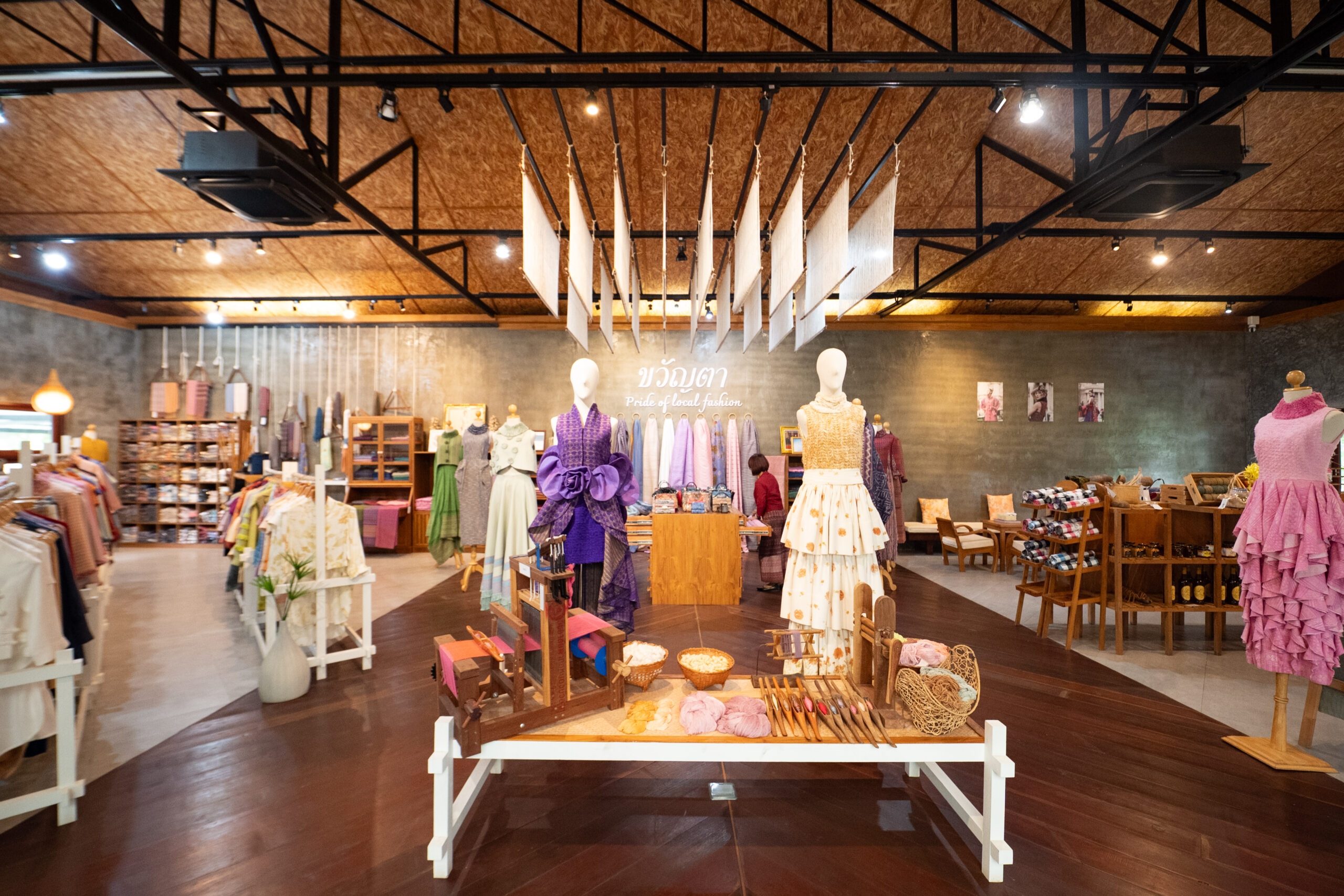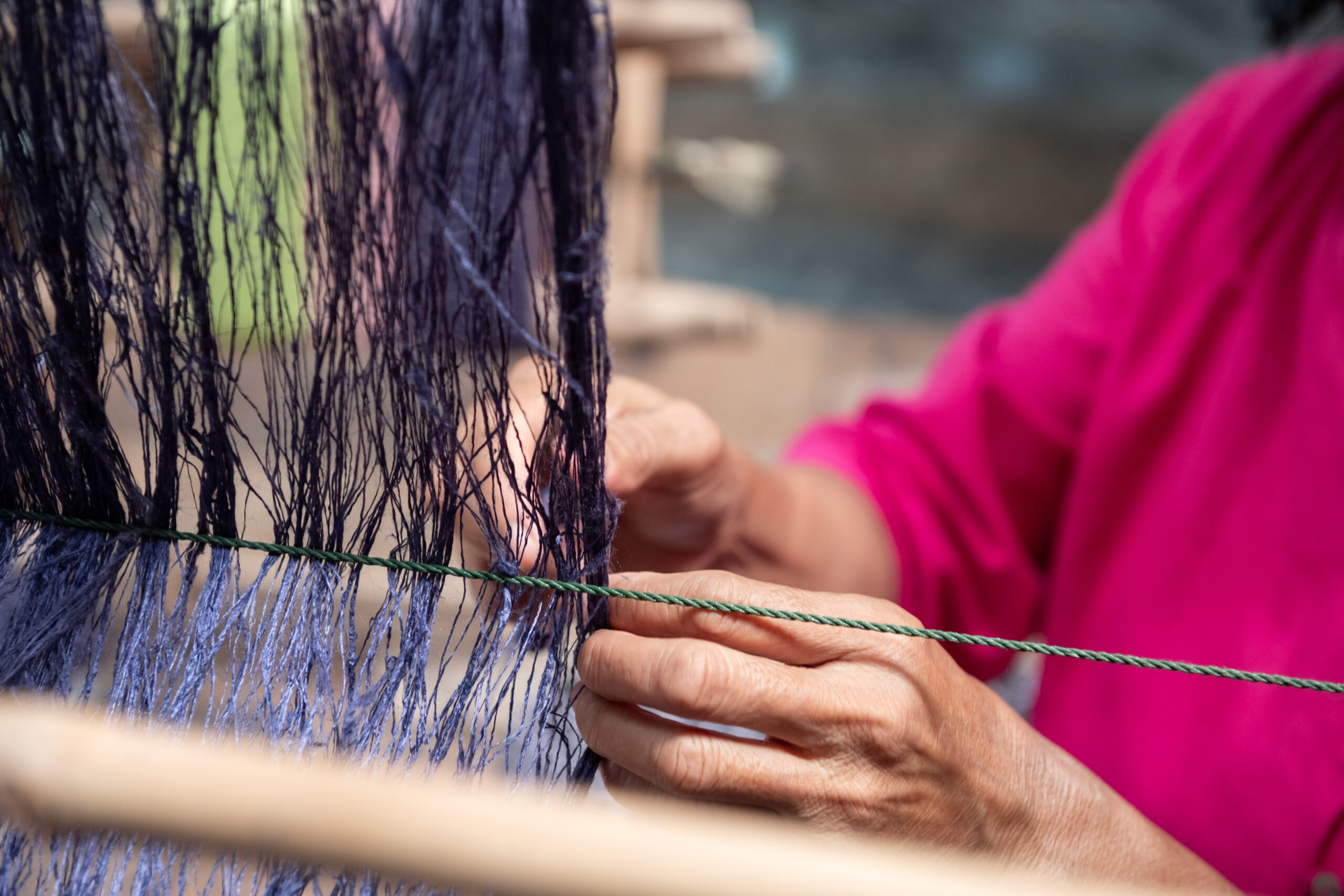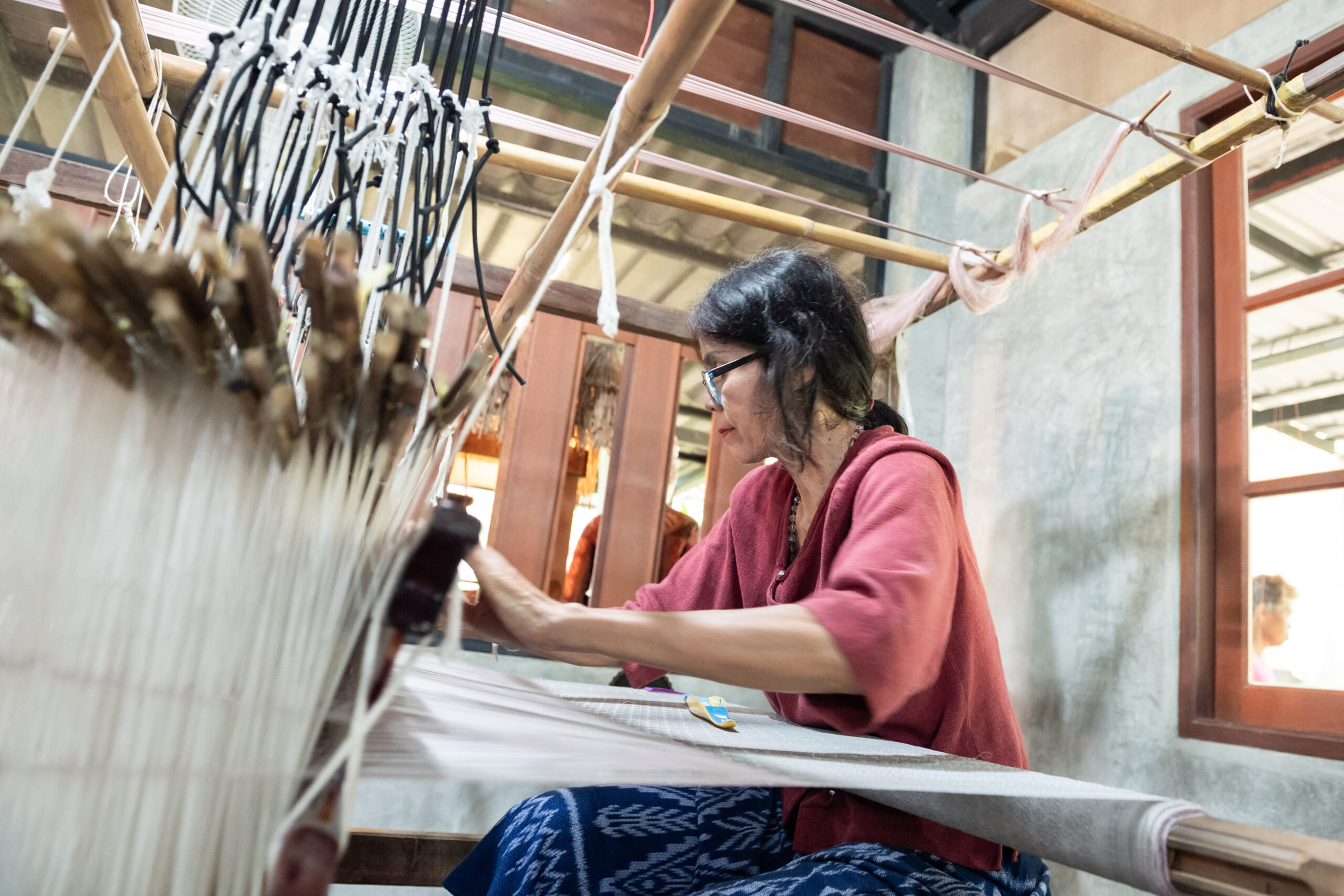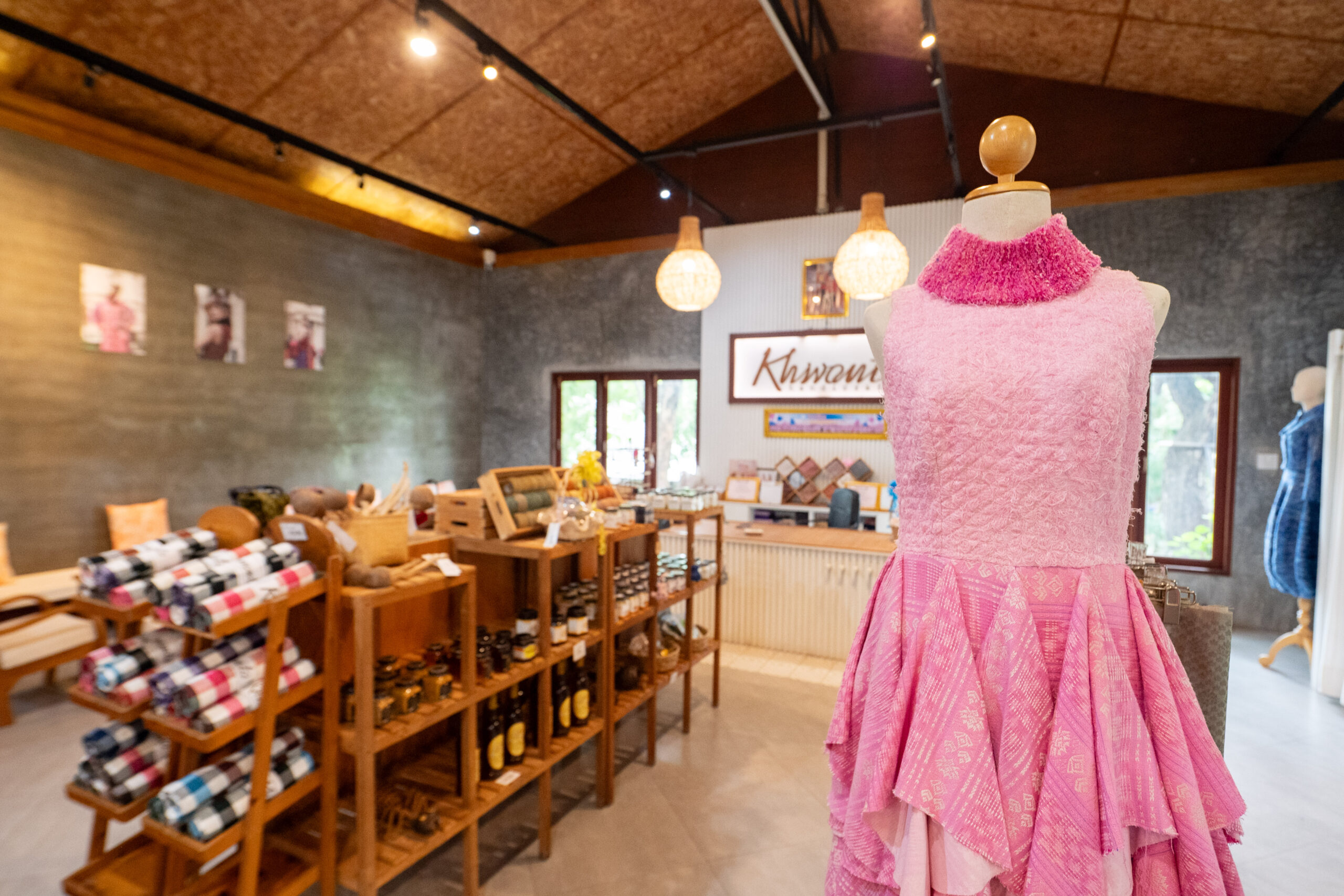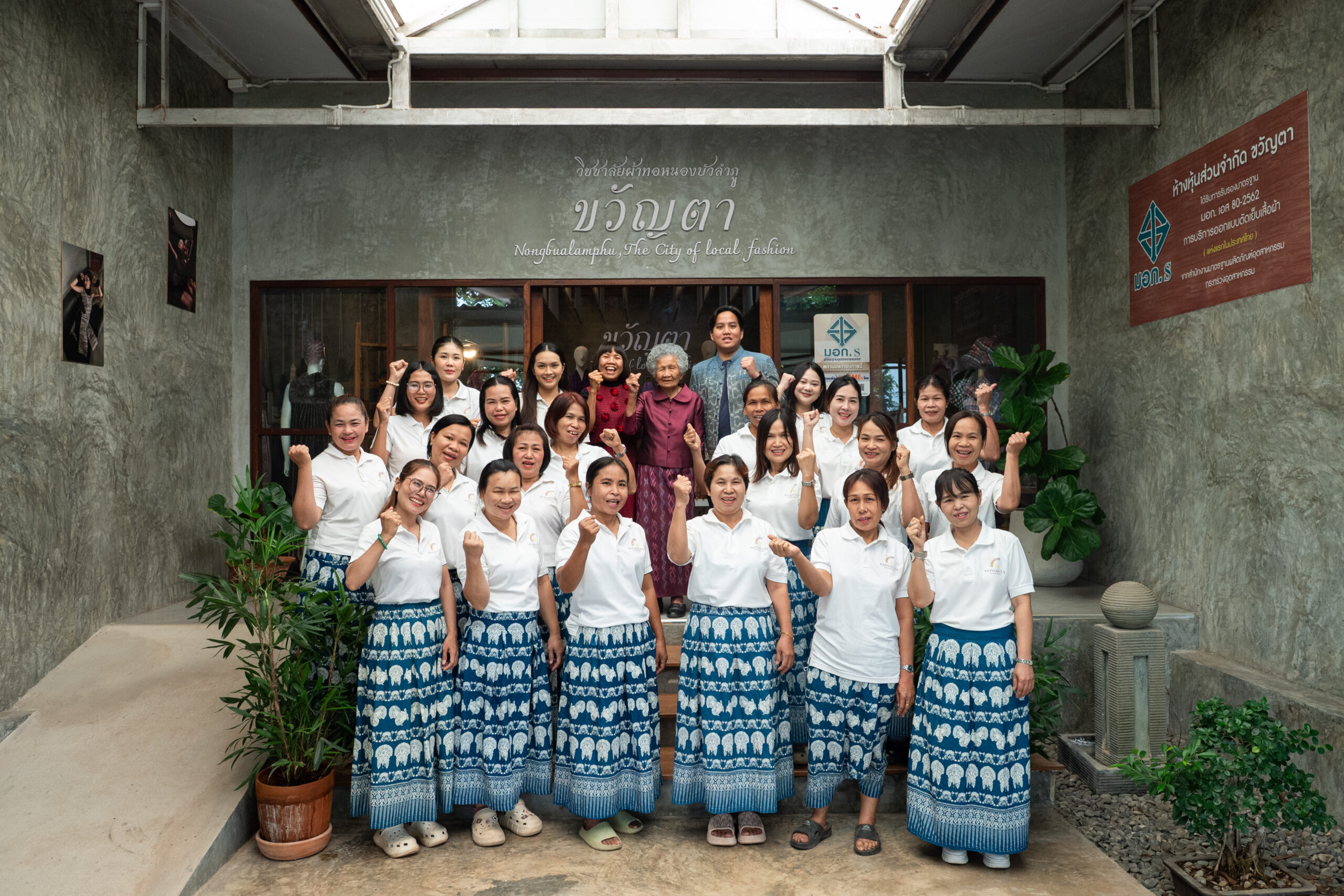
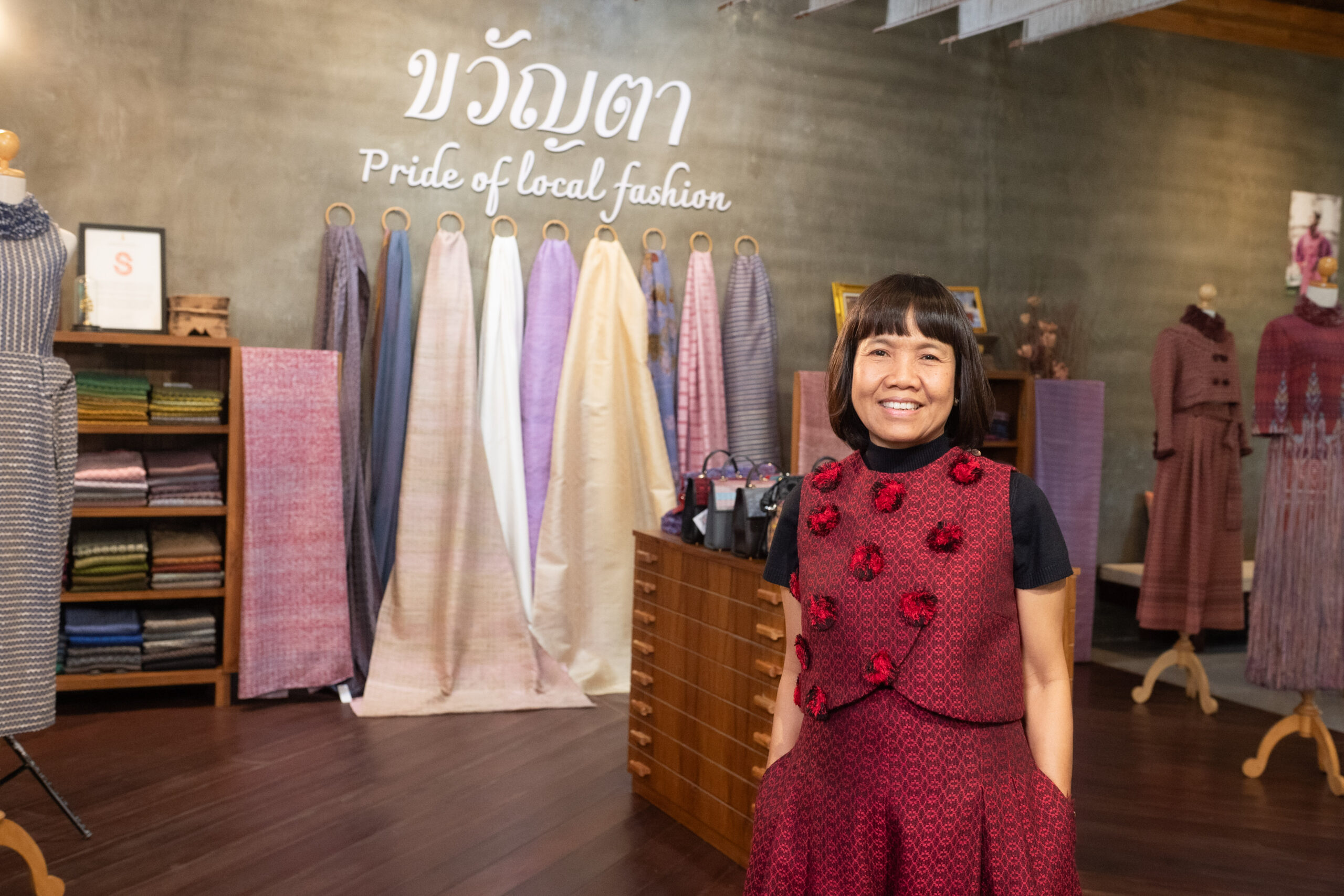
The Nong Bua Lamphu Handwoven Textile Academy (Khwan Ta Learning and Design Center) was founded by Ms. Sumamal Teja, affectionately known as “P’Aoy.” Her passion and inspiration for textile creation stem from her childhood, deeply rooted in memories of her mother sewing clothes and household items—such as pillowcases and blankets—entirely by hand, often embellished with intricate hand-stitched patterns for added beauty.

      She later pursued her studies at Udon Thani Vocational College, specializing in textiles and apparel, where she envisioned combining her early experiences with professional training to create garments for her own use. Motivated by this passion, P’Aoy continually sought to enhance her knowledge of textiles, particularly in the field of design, which led her to further her studies at Chanapatana International Design Institute.

      What began as a personal hobby of sewing clothes soon drew admiration from others, with many requesting her creations. This encouragement sparked the idea of turning her craft into a business—not only to work in a profession she loves but also to generate income for elderly residents in her hometown.

Operational Approach

      The Nong Bua Lamphu Handwoven Textile Academy (Khwan Ta Learning and Design Center) operates as a Social Enterprise with a clear mission to “preserve, enhance, and add value” to local handwoven textiles. Guided by creativity and design, and integrated with modern marketing strategies, the academy aims to elevate community handicrafts to international recognition while sustainably improving the quality of life for local residents.

1. Knowledge Hub & Preservation

  • Preserving Traditional Textile Patterns: Safeguarding and passing down the ancient weaving patterns of Nong Bua Lamphu, especially the unique “Khid Salap Mee” design, ensuring they are not lost to time.
  • Teaching and Knowledge Transfer: Offering training on weaving techniques, from basic processes such as cotton planting, spinning, natural dyeing, tie-dye (Mudmee), and weaving, to advanced techniques—open to both young and older generations. This helps cultivate the next generation of skilled artisans.

2. Product & Design Elevation

  • Contemporary Design: Maintaining a focus on natural dyes while developing new color palettes to meet modern market demands. Special attention is given to ensuring cotton threads are soft yet durable.
  • Strong Branding: Establishing a premium handicraft brand with a clear identity—high-quality, artisanal, and uniquely designed products that stand out in the marketplace.

3. Marketing & Sales

  • On-Site Showroom & Learning Center: Serving as both a production hub and a visitor destination where tourists and customers can observe the weaving process and purchase products directly, creating memorable experiences.
  • Online Channels: Leveraging the Facebook Page (Khwan Ta Learning and Design Center) as the main platform for showcasing new creations, hosting live sales events, and engaging directly with customers.
  • Trade Shows & Exhibitions: Participating in OTOP fairs, national fashion, and lifestyle exhibitions to launch new collections and establish business partnerships.

4. Community & Sustainability

  • Job Creation & Income Stability: Acting as a central hub to purchase woven products from local artisans, ensuring a steady and sustainable income so villagers can remain in their hometowns rather than seeking work elsewhere.
  • Fair Standards & Pricing: Setting fair and transparent pricing based on the complexity and quality of the work, ensuring artisans receive reasonable compensation.
  • Promotion of Natural Materials: Encouraging and supporting the use of eco-friendly natural dyes—such as indigo, tree bark, and various leaves—that are safe for both producers and consumers, aligning with the global eco-conscious product trend.

Key Strengths of the Academy

    True preservation of local wisdom, using traditional pattern techniques passed down from generation to generation, giving importance to community context, locality and traditional culture, with local wisdom teachers and weavers as the transmitters of knowledge.

  1. Authentic Preservation of Local Wisdom
    The academy is dedicated to safeguarding traditional weaving techniques passed down through generations, with deep respect for community, local context, and cultural heritage. Master artisans and local weaving experts serve as knowledge bearers, ensuring the authenticity of the craft.
  2. Hands-on Learning Environment
    As a practical learning hub, the academy offers immersive, hands-on activities—allowing visitors to try weaving, observe the entire production process from spinning and dyeing to weaving, and engage directly with the craft. Young people and community members are encouraged to actively participate in the learning process.
  3. Blending Innovation with Tradition
    Modern design concepts are harmoniously integrated with traditional textile patterns. Technology is used to enhance products, including computer-aided design and online marketing, while promoting the use of eco-friendly natural materials.
  4. Strengthening the Local Economy
    Handwoven textiles from the academy generate sustainable income for weavers and their families, fostering the formation of community enterprises or artisan groups. The distinctive products are in high demand both domestically and internationally.
  5. Creating Community Identity and Branding
    Each textile pattern reflects the identity of “Khwan Ta” and the local heritage, often accompanied by a meaningful story (storytelling) that adds value and uniqueness. The Khwan Ta Handwoven Textile brand stands as a symbol of the beauty and worth born from local wisdom.
  6. A Model for Sustainable Learning
    Beyond teaching weaving skills, the academy cultivates understanding of the cultural and lifestyle significance of textiles. Its integrated learning approach combines art, culture, science, and economics—promoting cultural preservation hand in hand with development.
  7.  

Academy Courses

  1. Weaving Skills
    • Fiber preparation, bleaching, and natural dyeing techniques
    • Loom setup, basic weaving patterns, and applied pattern weaving
    • Care and preservation of handwoven textiles
  2. Product Design & Development
    • Designing contemporary textile patterns
    • Transforming woven fabrics into products such as clothing, bags, and scarves
    • Cost calculation and pricing strategies